
Online stores that sell, and that your team can run
We have built stores for KITH, Simmons, Sea to Summit and Badgley Mischka. We pick the platform that fits how you sell, design for the way your customers shop, and connect the store to the systems behind it.
- Platform advice based on how you sell
- Migrations that keep your search traffic
- Connected to your ERP and 3PL
Stores we have built for
- KITH
- Simmons
- Sea to Summit
- Badgley Mischka
- O'Neill
- HAUS
- Starforge
Everything a store needs, from theme to warehouse
Store design and build
Home, collection, product and cart templates designed around how your customers browse, built so your team can edit them without a developer.
Platform migrations
Magento, WooCommerce and older BigCommerce stores moved with products, customers, orders and every URL redirected.
What a migration costs →B2B and wholesale
Company accounts, price lists, quantity rules and net terms, on the same store or a separate wholesale storefront.
Subscriptions and bundles
Subscribe-and-save, build-your-own bundles and gift sets that stay simple at checkout and in fulfilment.
Integrations
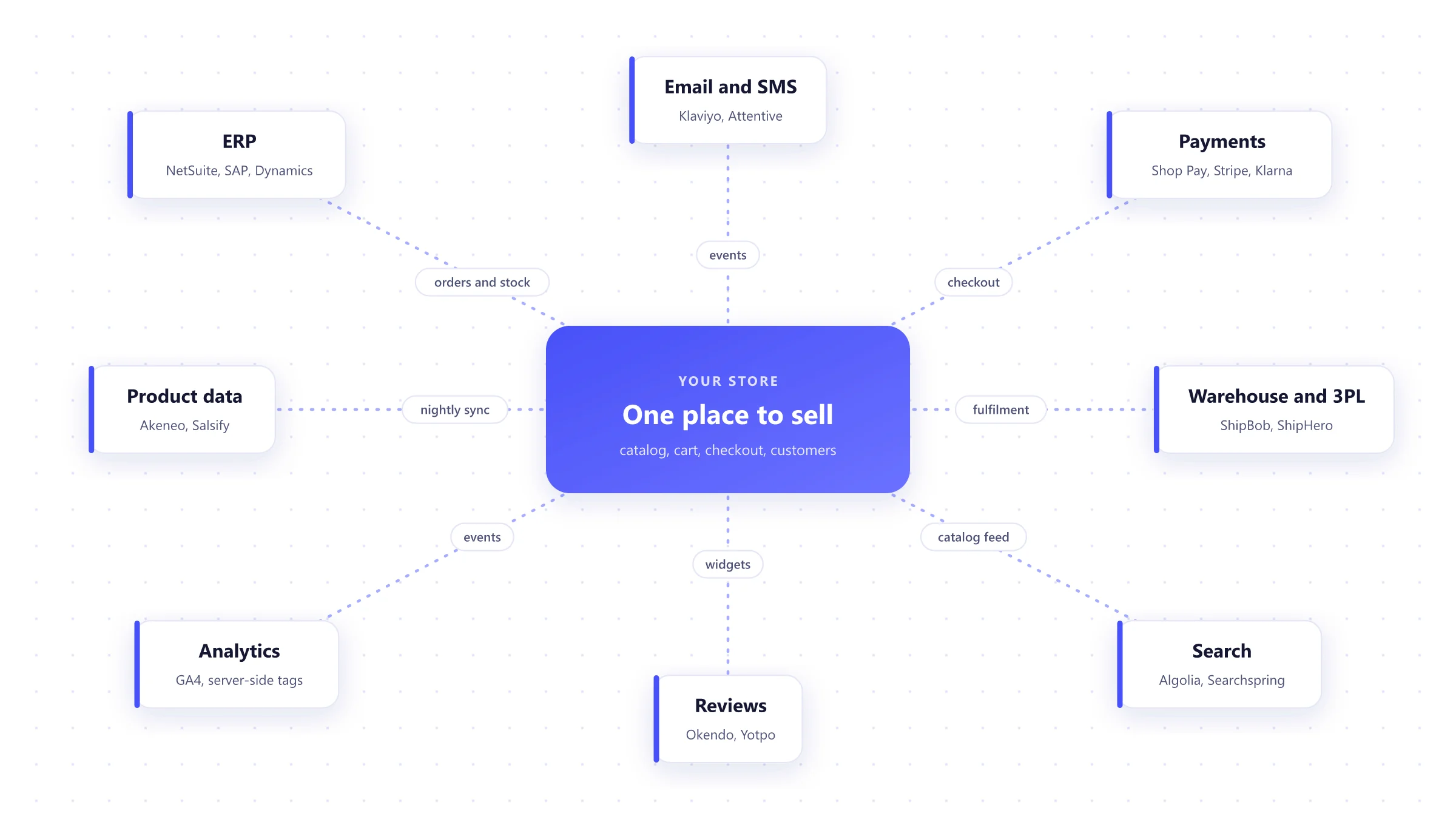
ERP, warehouse, product data, reviews and search connected with monitoring, so a failed sync is caught the same day.
ERP and systems integration →Speed and accessibility
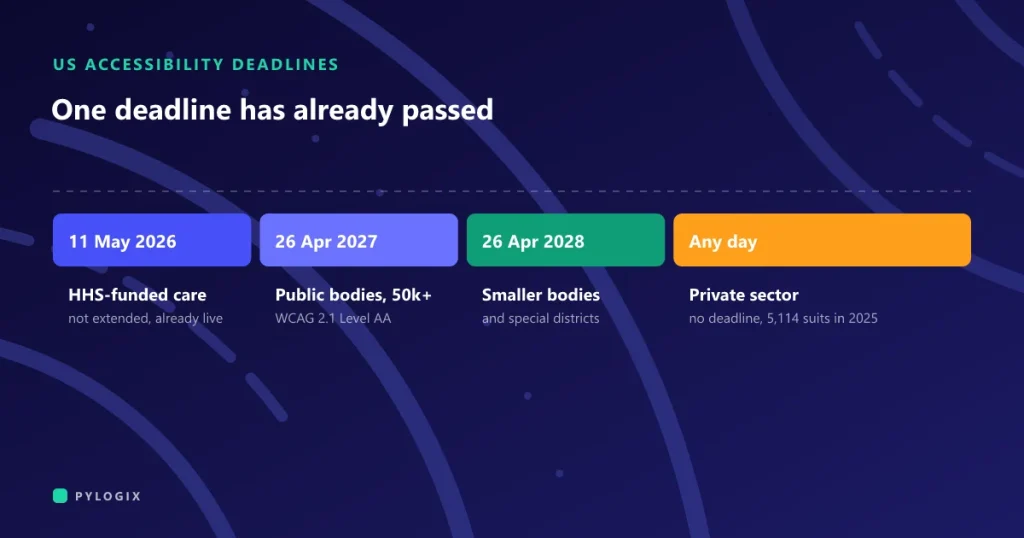
Core Web Vitals in the green and WCAG 2.2 AA accessibility, which is good for customers, search and legal risk.
Accessibility requirements →Shopify Plus, BigCommerce or headless?
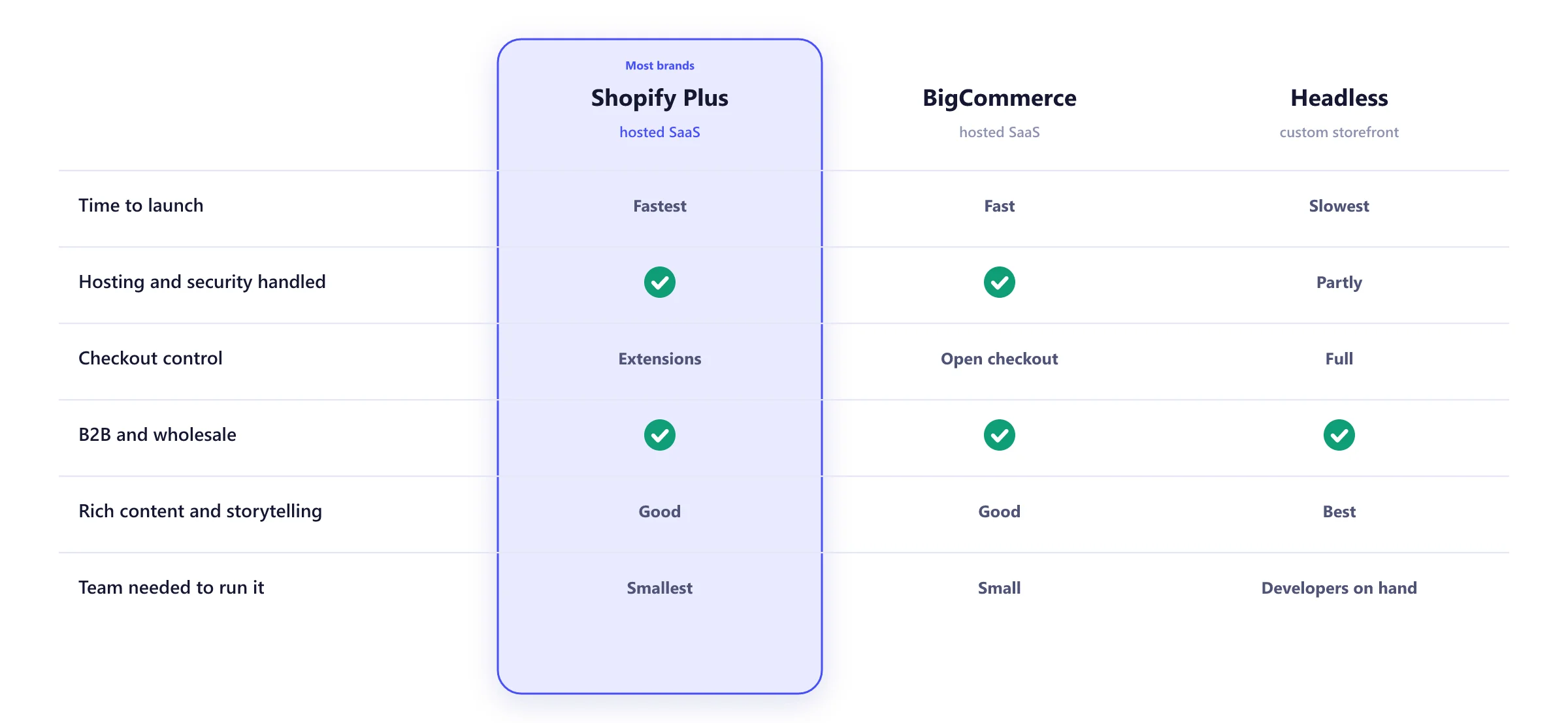
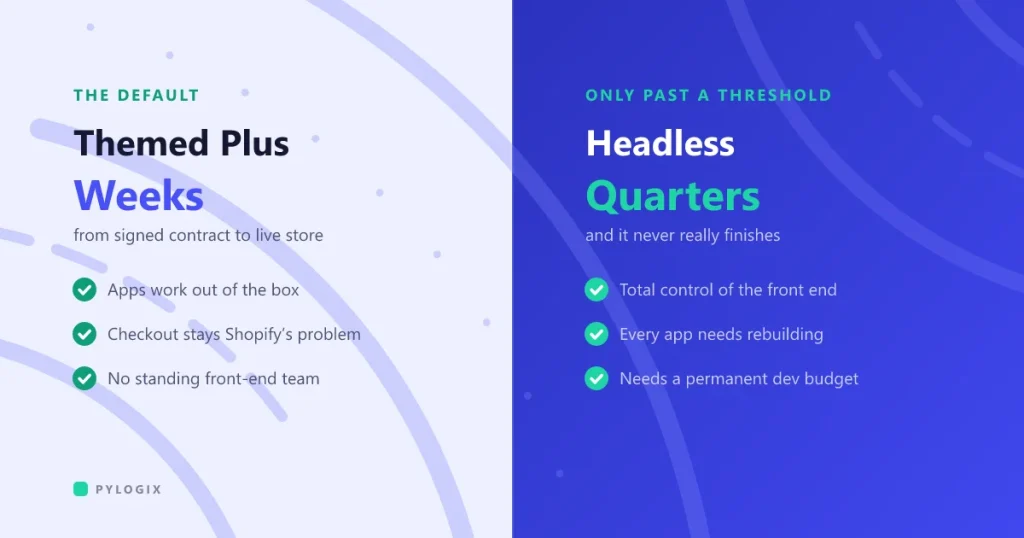
The platform decides how fast you launch, what you pay each month and how many developers you need to keep it running. We weigh those against how you sell, then recommend one.
A store is only as good as the systems behind it
Customers see the storefront. Your team lives with the stock levels, the order routing and the email flows. We map every connection in discovery and build each one with logging, retries and alerts, so the store and the warehouse always agree.
From discovery to a store that is live and selling
Discovery
2 to 4 weeksAnalytics review, customer research, platform recommendation and a scoped estimate.
Design
3 to 5 weeksKey templates designed and tested on mobile first, where most of your customers shop.
Build
6 to 10 weeksTheme, apps and integrations, with a staging store you can click through every sprint.
Migration and QA
2 to 4 weeksData moved, every old URL redirected, test orders placed through to the warehouse.
Launch and grow
OngoingMonitored launch, then conversion testing and new features.
Stores we have designed and built

KITH, built for Monday drops
A redesigned Shopify Plus store and an iOS app designed around the weekly release that brings shoppers back.
Read the case study →
Simmons, selling direct for the first time
After 150 years of selling through retailers, a direct-to-consumer store on Shopify Plus connected to the ERP behind every Serta Simmons brand.
Read the case study →
Sea to Summit, a thousand products made findable
A Shopify Plus redesign for an outdoor gear brand, built so shoppers can find the right item in a catalog of more than a thousand.
Read the case study →Platforms and tools we work with
Platforms
- Shopify Plus
- BigCommerce
- Adobe Commerce
- WooCommerce
Storefront
- Liquid
- Hydrogen
- Next.js
- React
Content
- Contentful
- Sanity
- Storyblok
Operations
- NetSuite
- SAP
- ShipBob
- Akeneo
Marketing
- Klaviyo
- Attentive
- Okendo
- Yotpo
Search and analytics
- Algolia
- Searchspring
- GA4
- Elevar
Ecommerce development FAQ
Which ecommerce platform should we use?
For most brands selling direct to consumers, Shopify Plus. It is quick to launch, secure and easy for a small team to run. BigCommerce suits some catalog-heavy and B2B setups. A headless build makes sense when content, multiple storefronts or unusual experiences matter more than build cost. We recommend one after discovery and put the reasons in writing.
Can we move platforms without losing our search traffic?
Yes, if the migration is planned for it. We map every old product, collection and content URL to its new address with a permanent redirect, carry over titles and descriptions, and watch Search Console daily for the first weeks after launch.
How long does a new store take?
A redesign or build on Shopify Plus usually takes three to five months, including discovery, design, build, data migration and testing. A migration with several integrations sits at the longer end.
Can you connect the store to our ERP and warehouse?
Yes. Orders, stock, prices and customers can sync with systems like NetSuite, SAP, Microsoft Dynamics and your 3PL, with retries and alerts when something fails. Our ERP integration page explains how.
What does a migration from Magento cost?
It depends on the catalog, the integrations and how much custom code the old store has. Our breakdown of Magento to Shopify migration costs covers the main drivers.
Do you help after launch?
Yes. We offer support plans for fixes, apps and small features, and our growth marketing team runs email, SMS, paid media and conversion testing for stores we built and for stores we did not.
Before you replatform or rebuild
 What a Magento to Shopify migration costs
 Shopify Plus or headless commerce
 Web accessibility requirements
Tell us about your store
Share your current platform, your catalog size and what is holding you back. We will come back with questions and a recommended approach.