
AI and machine learning that earns its place in production
Most AI projects stall somewhere between a promising demo and something the business can depend on. We build the part in between: the data pipeline, the evaluation, the cost model and the monitoring that turn a model into a feature your team trusts.
- A feasibility check before any build
- An evaluation suite with every model
- Runs in your cloud, on your data
Machine learning for decisions you make every day
The useful projects are rarely the flashy ones. They take a decision people already make by hand, many times a week, and make it faster or more consistent.
Forecasting
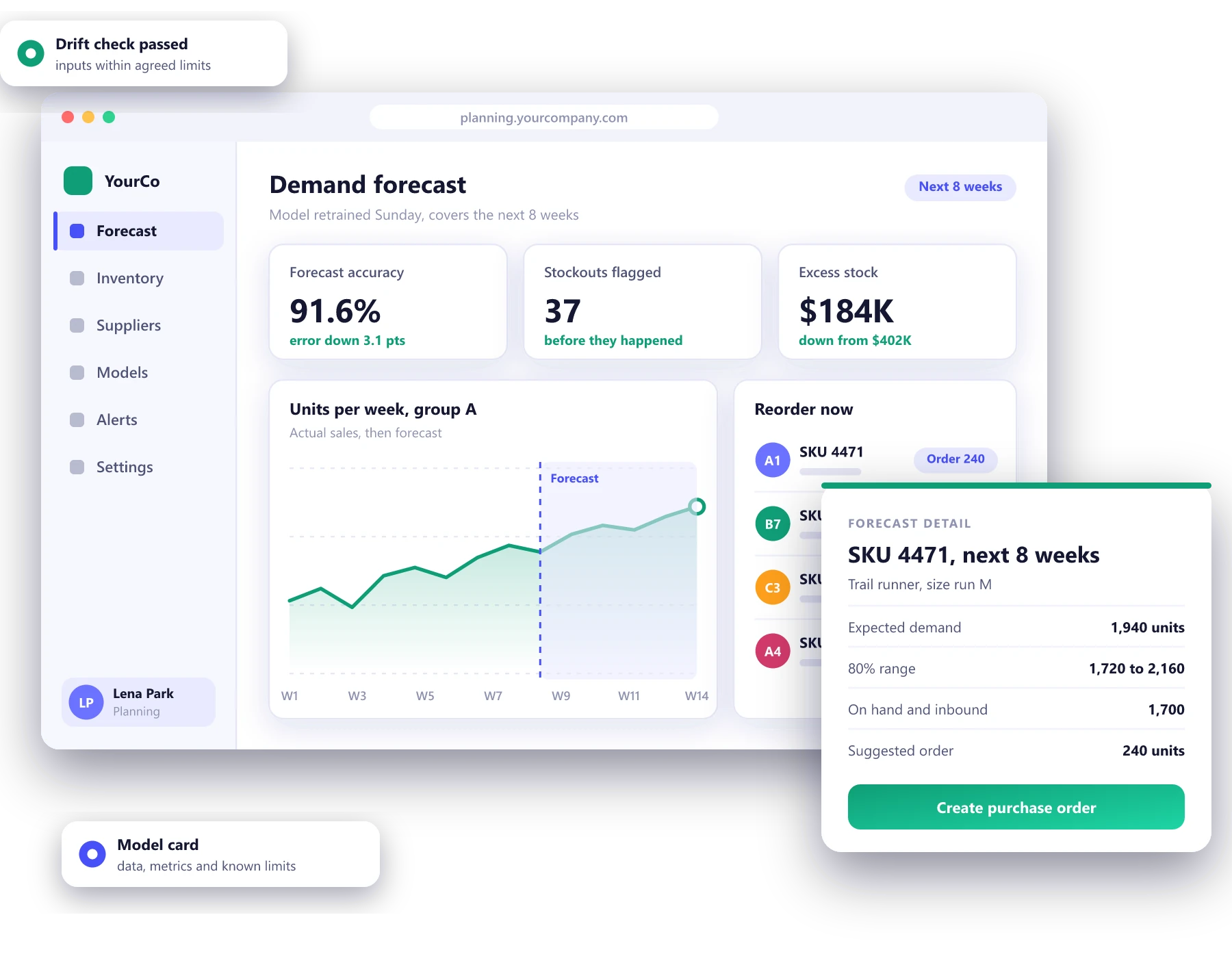
Demand, staffing, cash flow and inventory forecasts with an honest range around every number, retrained as your data changes.
For example: weekly demand per SKU so buyers reorder before a stockout.
Classification and routing
Tickets, leads, claims and documents sorted to the right queue or person automatically, with low-confidence cases sent to a human.
Document processing
Invoices, forms, contracts and claims turned into structured data your systems can use, with a review screen for anything uncertain.
Search and recommendations
Search that understands what people mean, and product or content recommendations based on what similar customers did.
Anomaly and fraud detection
Unusual orders, payments, sensor readings or logins flagged for review, tuned so the alerts stay worth reading.
Generative AI features
Assistants, summaries and drafting built on large language models, grounded in your own documents.
Generative AI and LLMs →Every project starts with a business decision
Before anyone trains a model we write down the decision it will support, what a wrong answer costs and what "good enough" means in numbers. Then we build the simplest thing that could work. If rules do the job, you get rules and a much smaller bill.
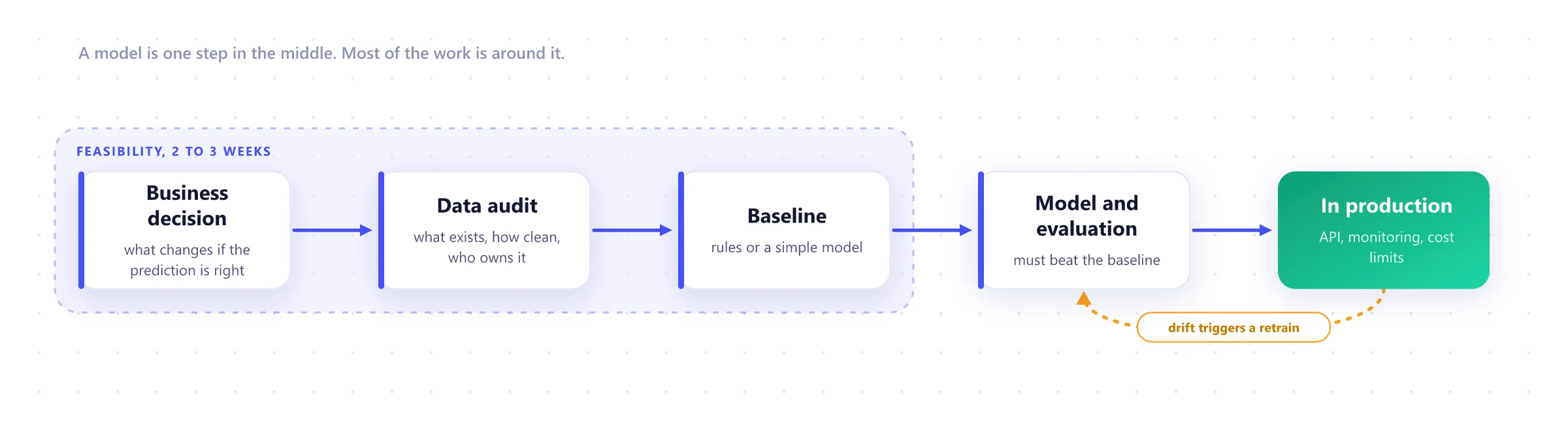
Rules, classic machine learning or a language model?
Large language models get the headlines, but they are the most expensive way to make a prediction. We pick the approach from the problem and the data, and compare it against the alternatives on your own test set.
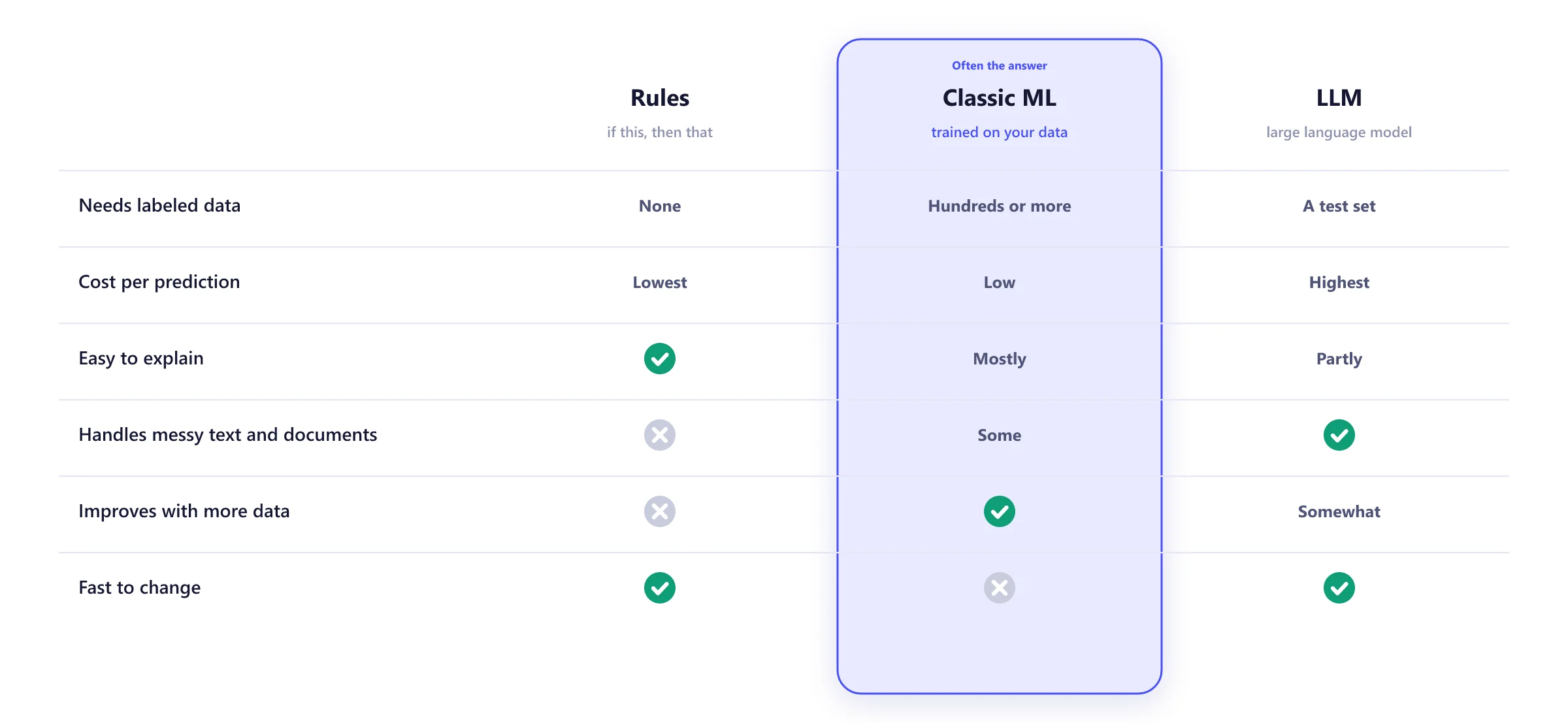
Feasibility
2 to 3 weeksDecision defined, data audited, baseline built. Ends with an expected accuracy range and cost per prediction.
Data pipeline
2 to 4 weeksVersioned datasets, cleaning and labeling, with the pipeline code in your repository.
Model and evaluation
3 to 6 weeksCandidates compared against the baseline on an agreed test set. Results written up in a model card.
Integration
2 to 4 weeksThe model served behind an API inside your product, with a human review step where mistakes are costly.
Monitoring
OngoingDashboards for data drift, accuracy and cost, with alerts and a retraining job that runs the same checks.
Data scientists who ship models into production
Our AI and ML work is led by Jose R., Senior Team Lead for data science and AI/ML. They work alongside our software engineers, because a model that cannot be deployed, monitored and paid for is not finished.
What ships with every model
- A model card with the data, metrics and known limits
- An evaluation suite you can rerun on any new version
- Pipeline and training code in your repository
- Monitoring dashboards for drift, accuracy and cost
- A retraining job with the same release checks
- A cost report at your real prediction volume
Tools we use for machine learning
Mostly open source, so you are not locked into a vendor. Managed cloud services where they save real operational work.
Modeling
- Python
- PyTorch
- scikit-learn
- XGBoost
- Polars
Language models
- OpenAI
- Anthropic
- Llama
- Mistral
- pgvector
Data
- PostgreSQL
- Snowflake
- BigQuery
- dbt
- Airflow
MLOps
- MLflow
- Docker
- Kubernetes
- Evidently
- Great Expectations
Cloud
- AWS SageMaker
- Azure ML
- Vertex AI
Serving
- FastAPI
- Ray Serve
- ONNX Runtime
AI and machine learning FAQ
How do we know whether AI is right for our problem?
We start with a short feasibility phase. We define the decision the model has to support, check the data you already have and build a simple baseline, often a set of rules. If the baseline is good enough, you do not need machine learning and we will say so. If it is not, you get an expected accuracy range before committing to a build.
How much data do we need?
It depends on the approach. A classic model usually needs hundreds to thousands of labeled examples for each outcome it predicts. An approach built on a large language model can start with far fewer, but it still needs a trustworthy test set. Our guide to data readiness for machine learning has a checklist.
Can our data stay inside our own infrastructure?
Yes. Pipelines and models run in your cloud account. Where a hosted model is the right choice, we use providers whose business terms exclude training on your data, or we run open-weight models inside your own network.
How do you measure whether the model works?
We agree an evaluation set and a target with you before training starts, and every model is compared against the baseline on that set. The same evaluation runs again on every retrain, so a change that makes things worse is caught before release.
What does it cost to run a model in production?
We estimate the cost per prediction during feasibility, including hosting, API calls and monitoring, and show you the monthly figure at your expected volume. For language models, this breakdown of LLM running costs explains where the money goes.
What happens when the model gets worse over time?
Data drifts as your business changes. We monitor input data and prediction quality, alert when either moves outside agreed limits, and set up a retraining job that goes through the same evaluation before it replaces the live model.
Worth reading before you start
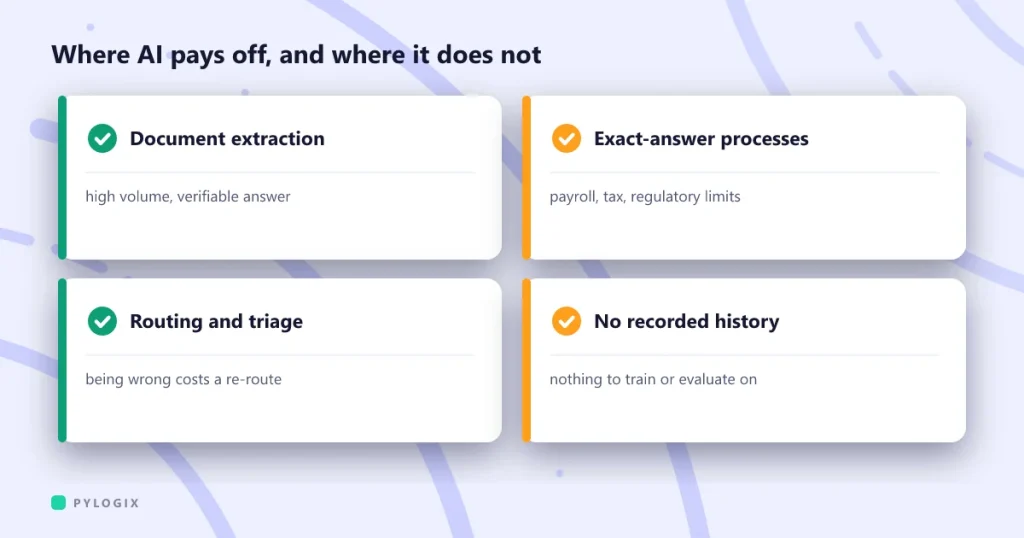 Where AI actually pays off in business software
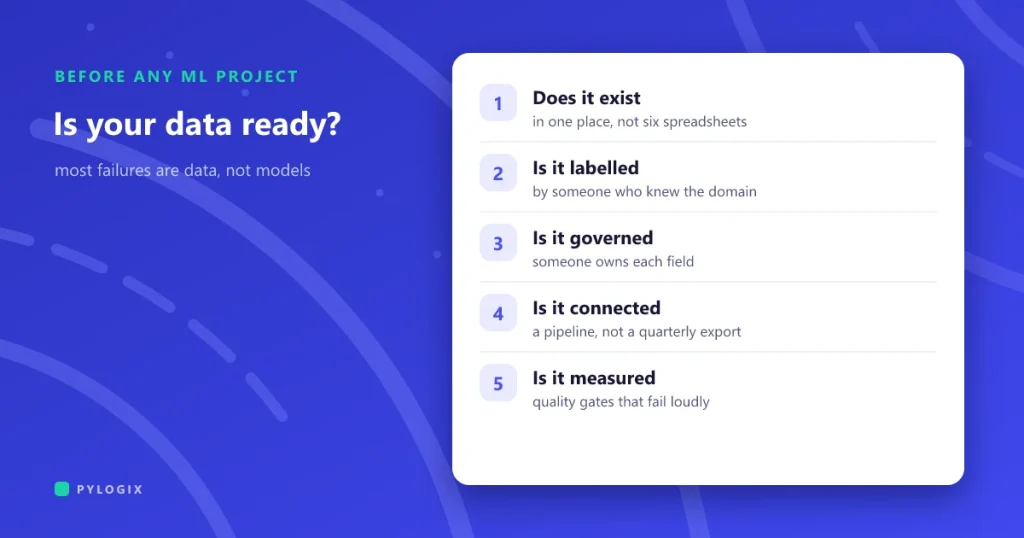 Is your data ready for machine learning?
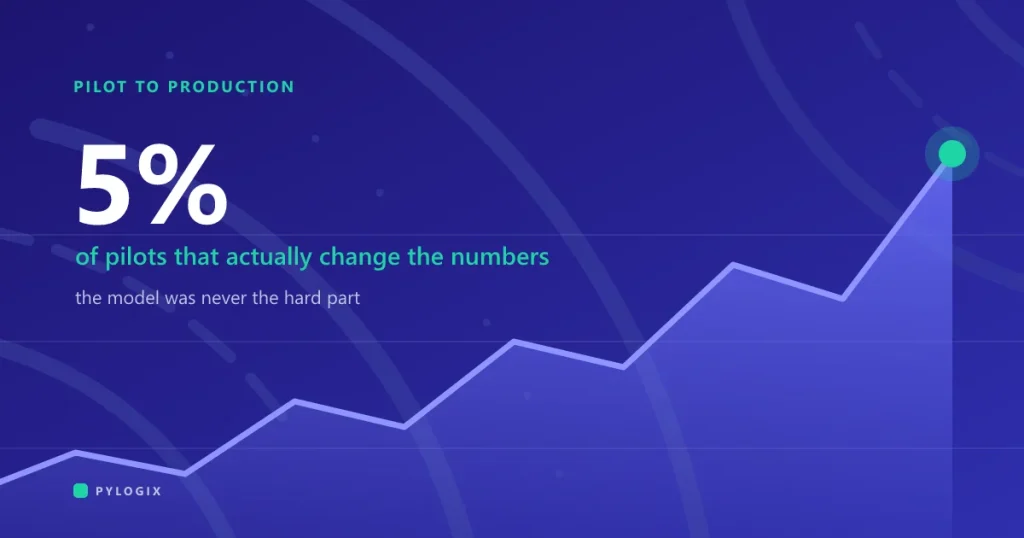 Taking an AI pilot to production
Tell us the decision you want to automate
We will tell you whether machine learning is the right tool, what data it needs and what it would cost to run. If a simpler approach will do, we will say that too.