
Why companies choose to build with Pylogix
Choosing a development partner is mostly about trust. Will they tell you the truth, ship what they promised and leave you in control? This is how we earn it, and what you can hold us to.
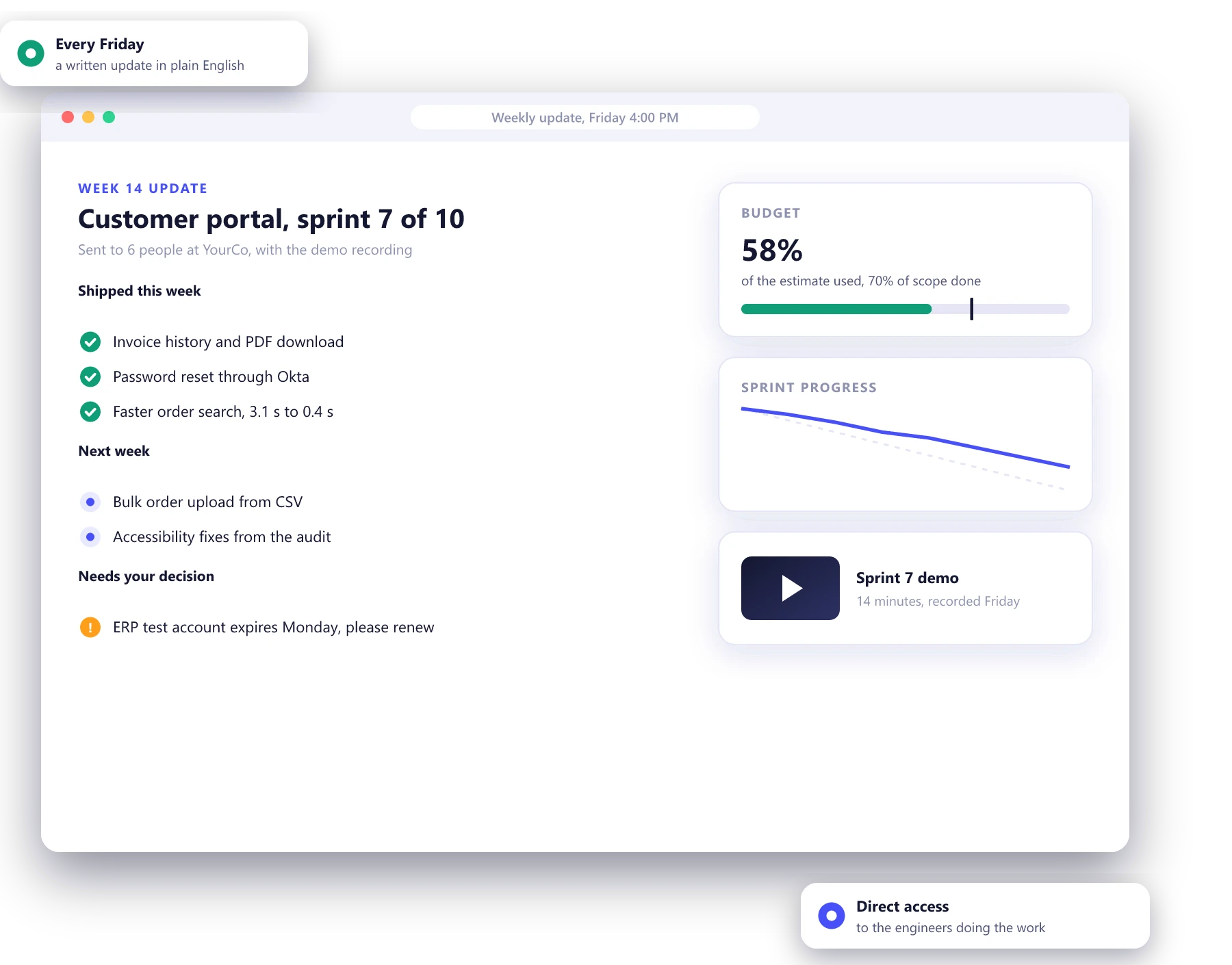
- A written update every Friday
- Fixed-price discovery before any build
- Code in your repository from day one
Six principles behind every project
Business goals first
We start with what the software has to change for your business, and judge every decision by it. Technology for its own sake is how budgets disappear.
Nothing hidden
You get access to the board, the repository and the people. You see what we see, when we see it.
Honest budgets
Estimates come as ranges with the assumptions written down. Changes are priced before work starts, never after.
Reuse before rebuild
If a product, an open-source tool or an integration does the job, we recommend it, even when it means building less.
The right technology for you
We pick tools your team can hire for and maintain, not the ones we happen to prefer. The reasons go in writing.
Small releases
Working software every two to three weeks, so problems surface while they are still cheap to fix.
What you can hold us to
Principles are easy to write. These are the specific things that happen on every project, and you can check each one.
- A written update every Friday, including risks
- A demo of working software every sprint
- Code in your repository from the first commit
- IP assigned to you in the contract
- Changes priced before any work starts
- A handover plan whenever you want one
What clients say about working with us
Pylogix has proven to be a trustworthy partner for our technical needs. They consider the big picture and bring options for system flexibility and cost-effective solutions. With a low defect rate and thorough testing, we appreciate their Agile approach and transparent communication to keep us informed and on schedule.
They have exceeded our expectations with the results they have delivered in a short time frame. Their reliability, communication and efficiency make them a perfect partner for any business.
The team is incredibly talented and their attention to detail is outstanding.
Where we fit, and where we do not
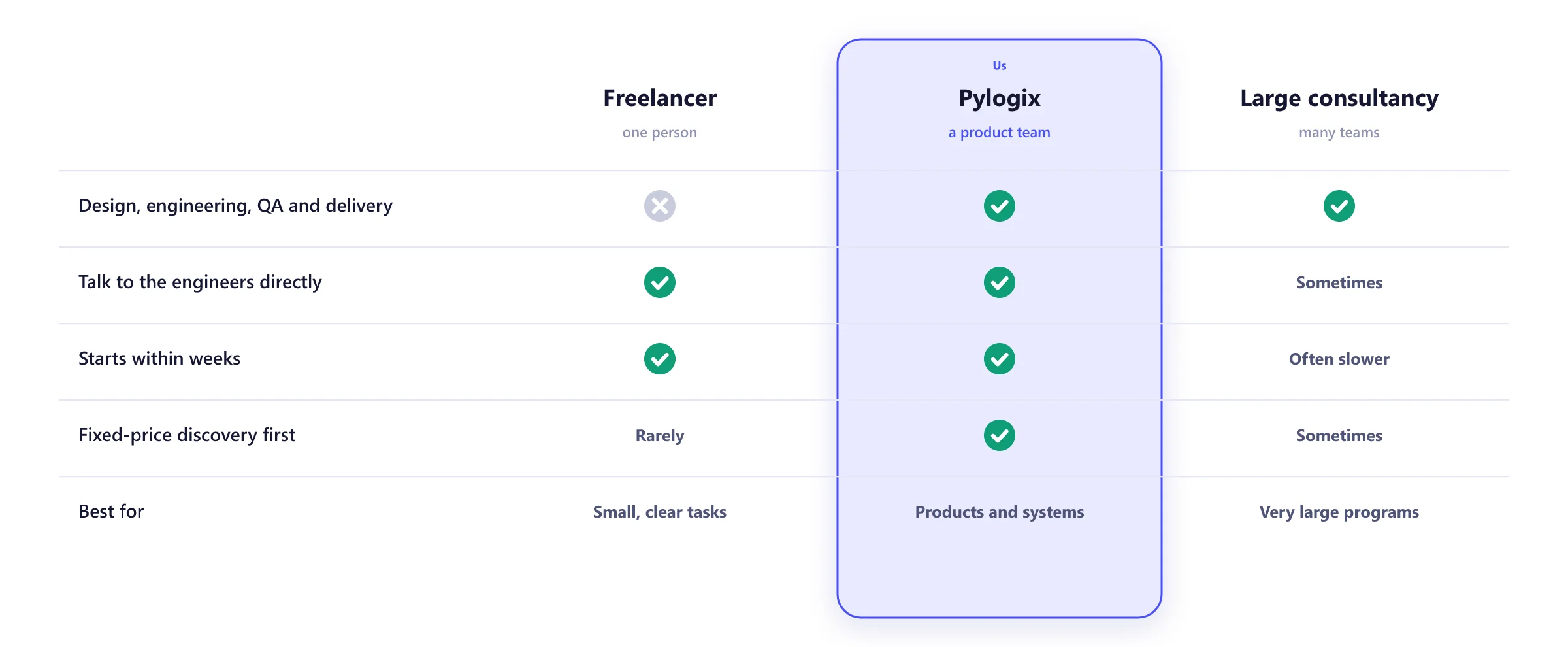
A freelancer is often the better choice for a small, clear task. A large consultancy makes sense for very large programs. We are built for the space in between: products and systems that need a whole team without the overhead.
The same five stages, every time
Discovery
2 to 4 weeksFixed price. Ends in a scoped estimate, a recommended approach and a clear first release.
Design
WeeksFlows and prototypes tested with the people who will use them.
Build
SprintsWorking software every two to three weeks, on staging for you to try.
Launch
StagedMonitored releases with the team on hand for the first weeks.
Support
MonthlyFixes, updates and improvements, or a handover to your team.
Work that shows how we operate
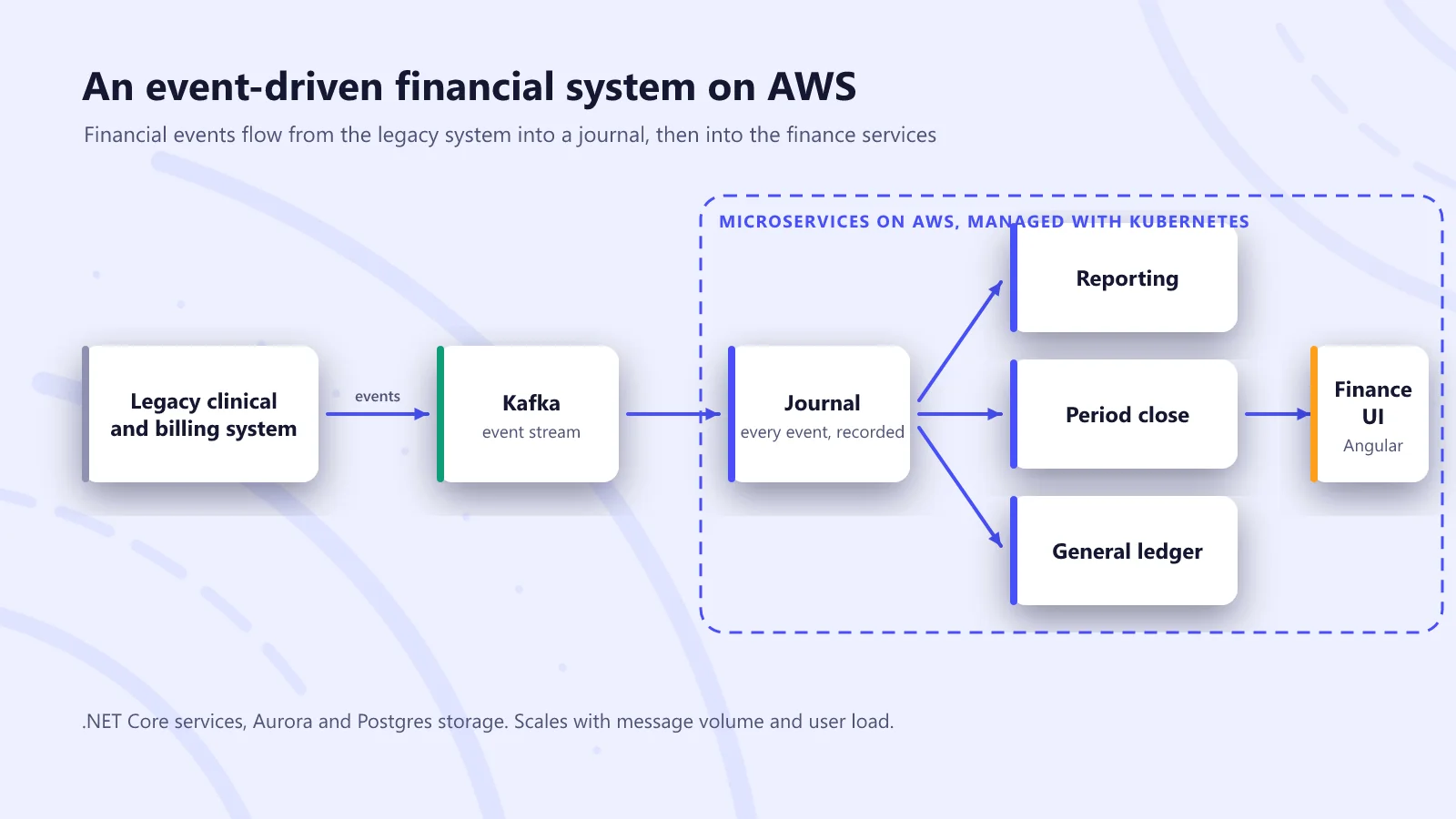
A financial system rebuilt for new CMS payment rules
An event-driven finance platform for a home health and hospice provider, delivered to a fixed regulatory deadline while the rules were still being clarified.
Read the case study →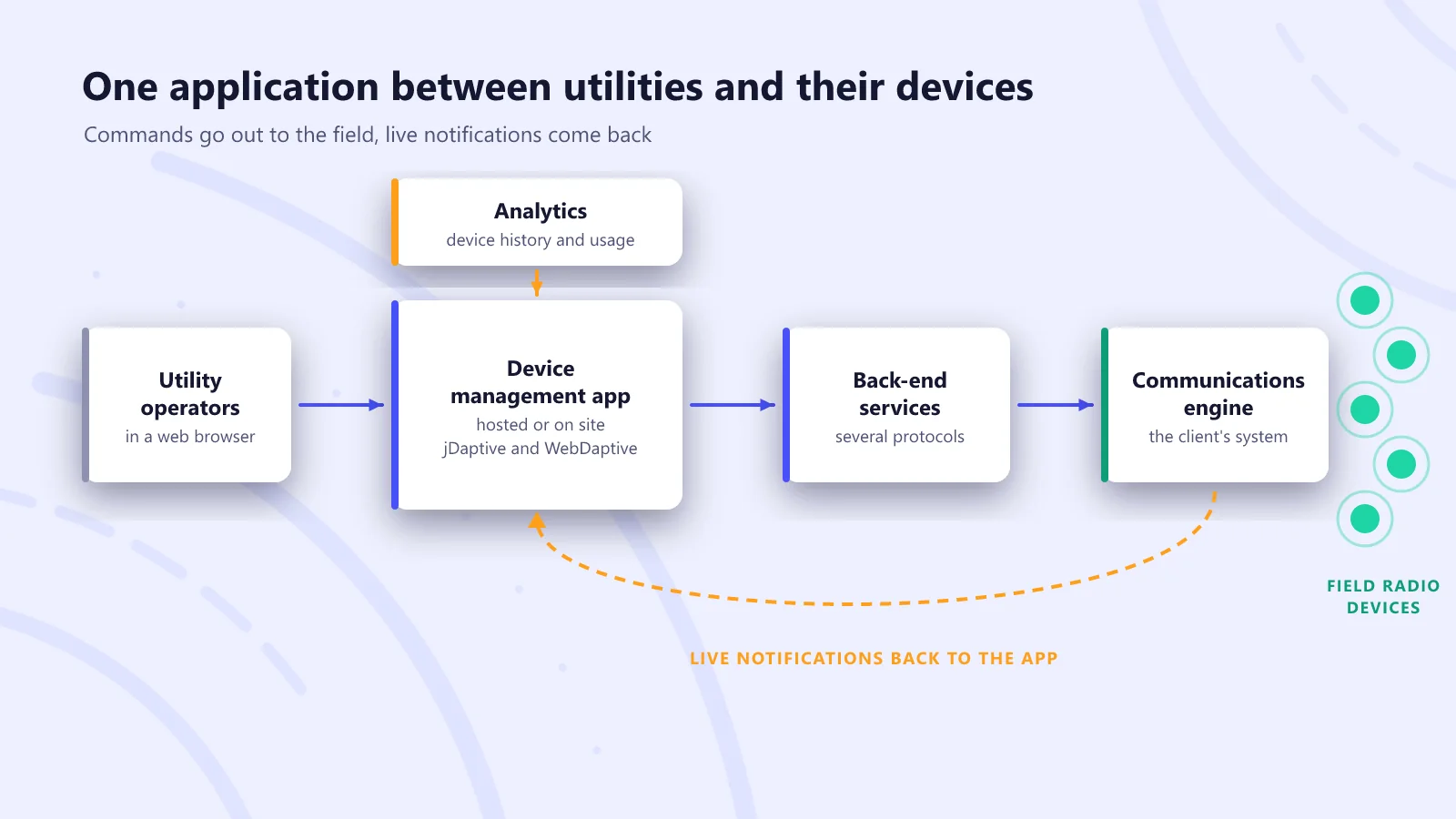
Remote management for utility field devices
A central web application that lets water and energy utilities change settings on their radio devices, or upgrade a whole territory, without a site visit.
Read the case study →
Three shoe stores moved off Magento
Three Novus Group stores replatformed from Magento to Shopify Plus, with a new SAP connection and a fresh design for each brand.
Read the case study →Working with Pylogix
How do you price projects?
Discovery is fixed price. After that, either a fixed price per phase for a well-defined scope, or a monthly rate for a dedicated team when the roadmap will keep changing. Our guide to fixed price or time and materials explains the trade-offs.
What happens if the scope changes?
Scope always changes a little. On a fixed-price phase, each change is written up and priced before any work starts, so you decide with the cost in front of you. On a dedicated team, you simply reorder the backlog.
How will we communicate?
In your tools, usually Slack or Teams, plus a sprint demo every two to three weeks and a short written update every Friday. You can talk to the engineers directly whenever you need to.
What if we want to end the engagement?
You can, with the notice agreed in the contract. Because the code, infrastructure and documentation are already yours, we run a handover and your team or a new supplier can carry on.
Will you sign an NDA?
Yes, before the first detailed conversation about your project.
Before you choose a partner
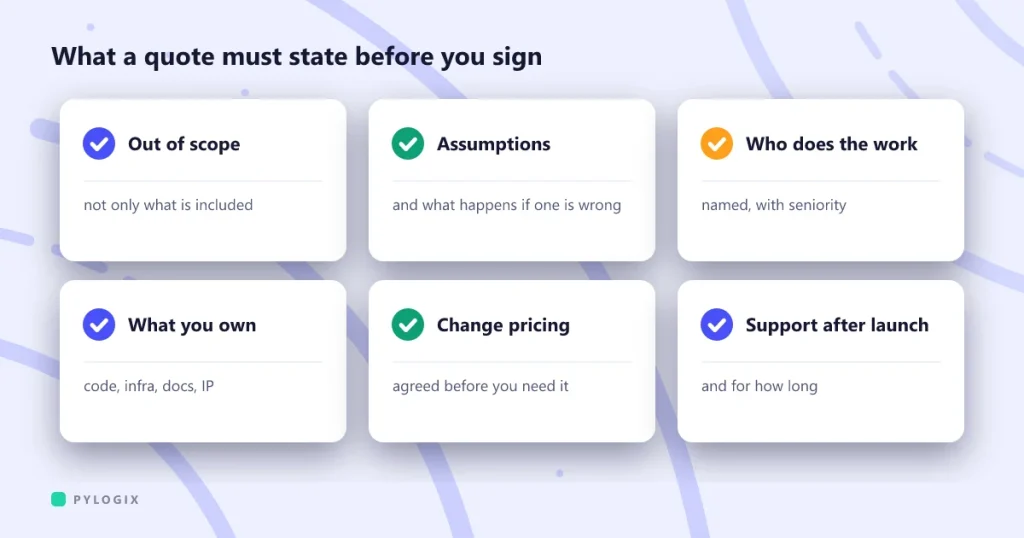 How to choose a software development partner
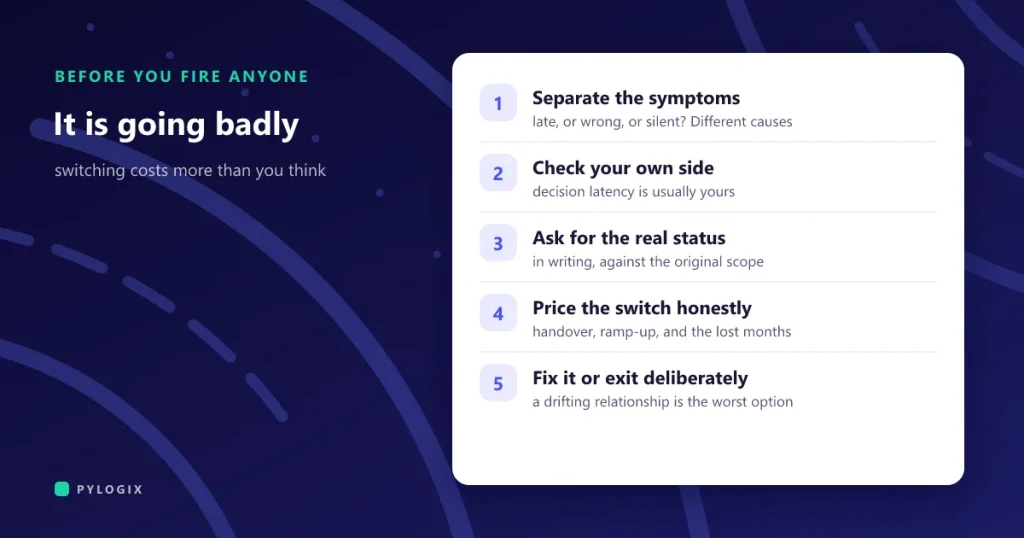 Signs a software development relationship is failing
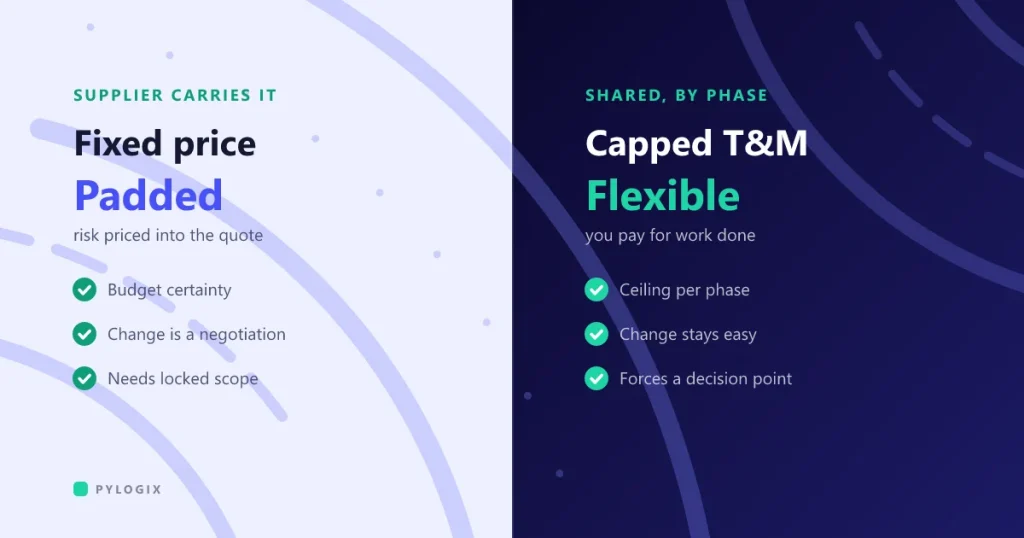 Fixed price or time and materials
See whether we are the right fit
Tell us about the project. We will ask the questions a good partner should ask, and tell you honestly if someone else would suit you better.