
Web applications built to grow past the first version
SaaS products, customer portals and internal tools that run in the browser. We ship a focused first version quickly, then keep the architecture clean enough that the tenth feature is as easy to add as the second.
- A working release every 2 to 3 weeks
- Security built in from the first sprint
- Architecture decisions written down
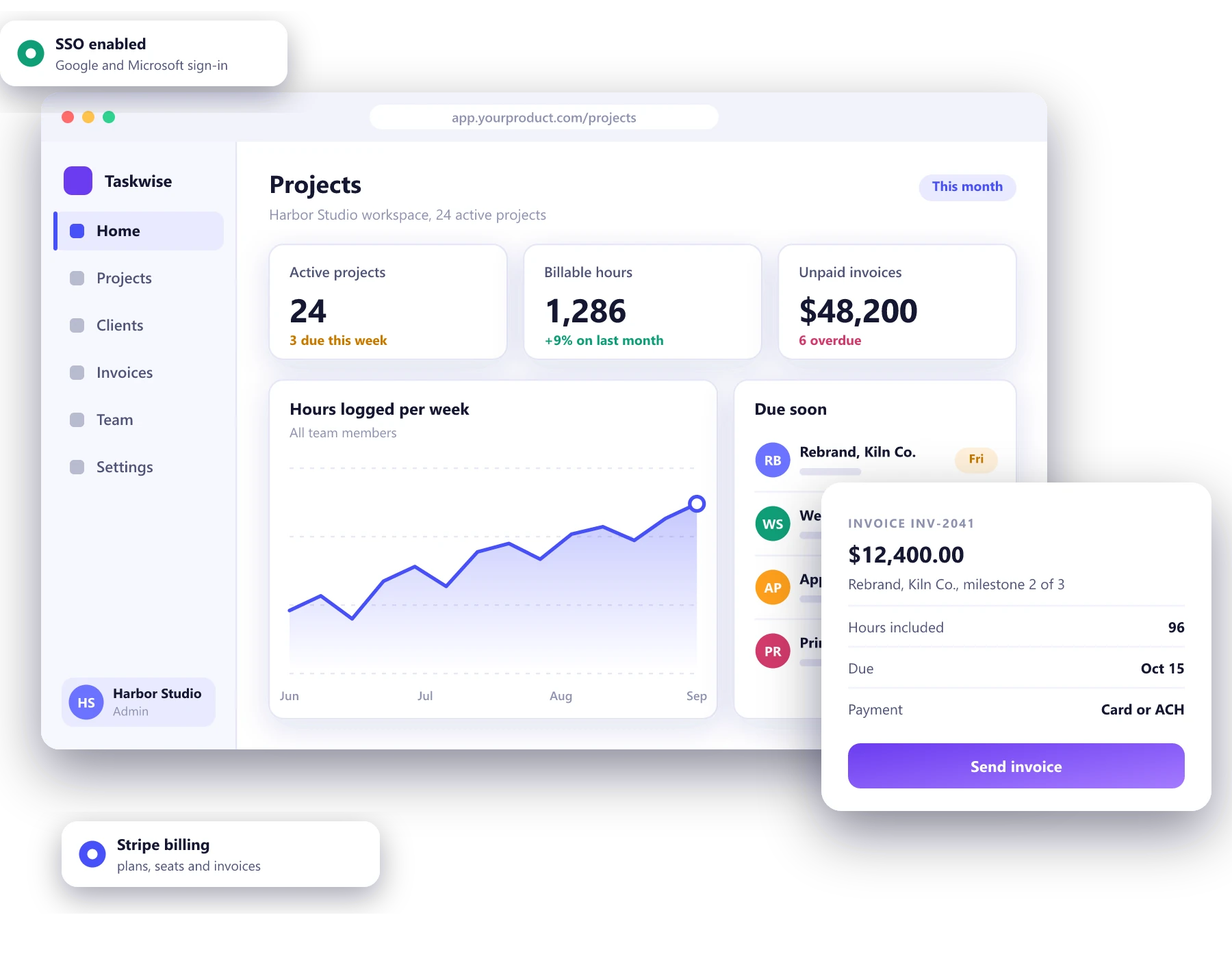
Web applications for customers, teams and partners
SaaS products
Multi-tenant products with sign-up, onboarding, plans and billing, and the admin tools your support team needs.
Scoping a first version →Customer portals
Self-service accounts where customers order, track, pay and download without calling your team.
Internal tools
Operations, approvals and back-office tools that replace spreadsheets and shared inboxes.
Marketplaces and booking
Two-sided platforms with listings, search, scheduling, payments and payouts between users.
Dashboards and reporting
Live dashboards over your own data, with exports and scheduled reports for the people who need them.
APIs and integrations
Public and private APIs, webhooks and connections to the systems your application depends on.
Systems integration →When a custom web application is worth it
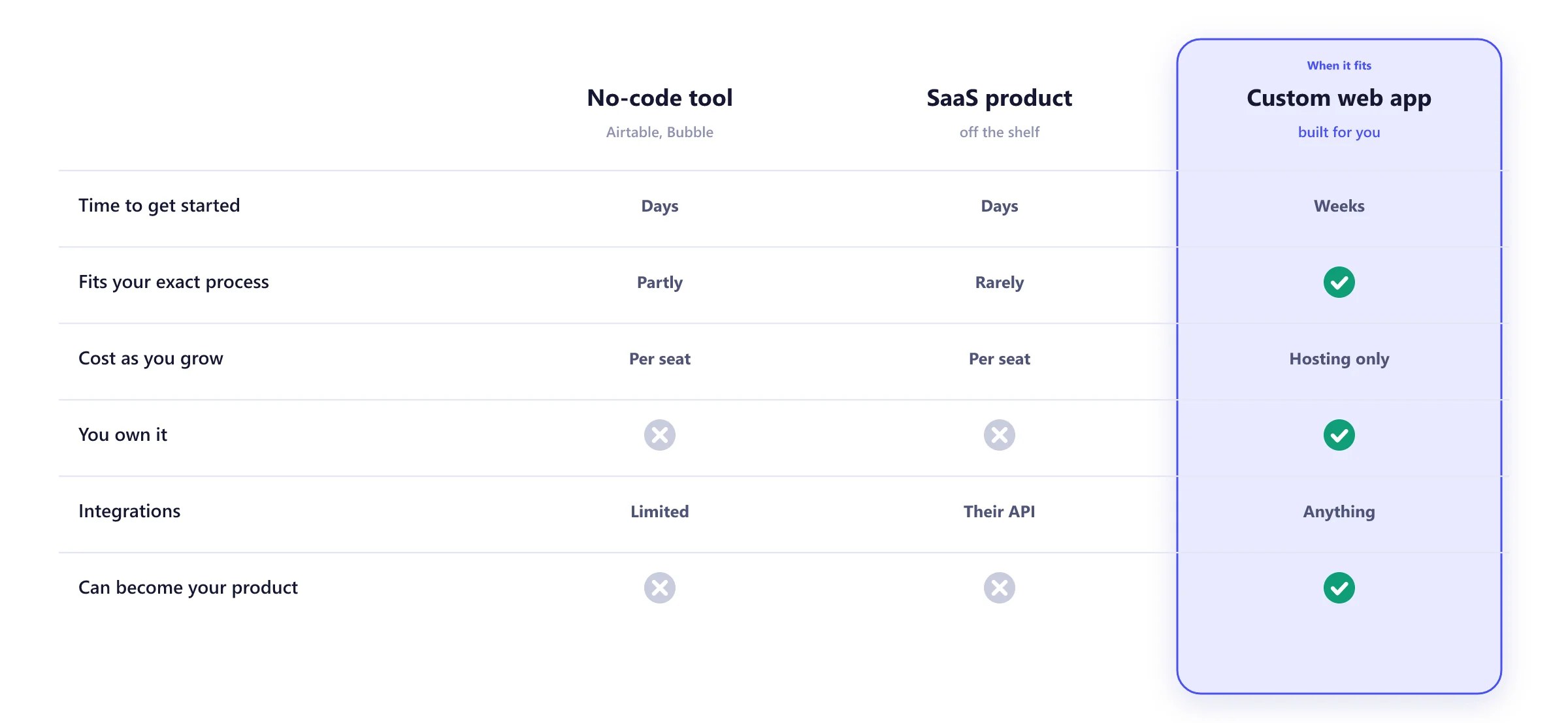
Custom software costs more up front. It pays off when the process is specific to you, when per-seat pricing grows faster than you do, or when the application is the product you sell. Our guide to building or buying software goes deeper.
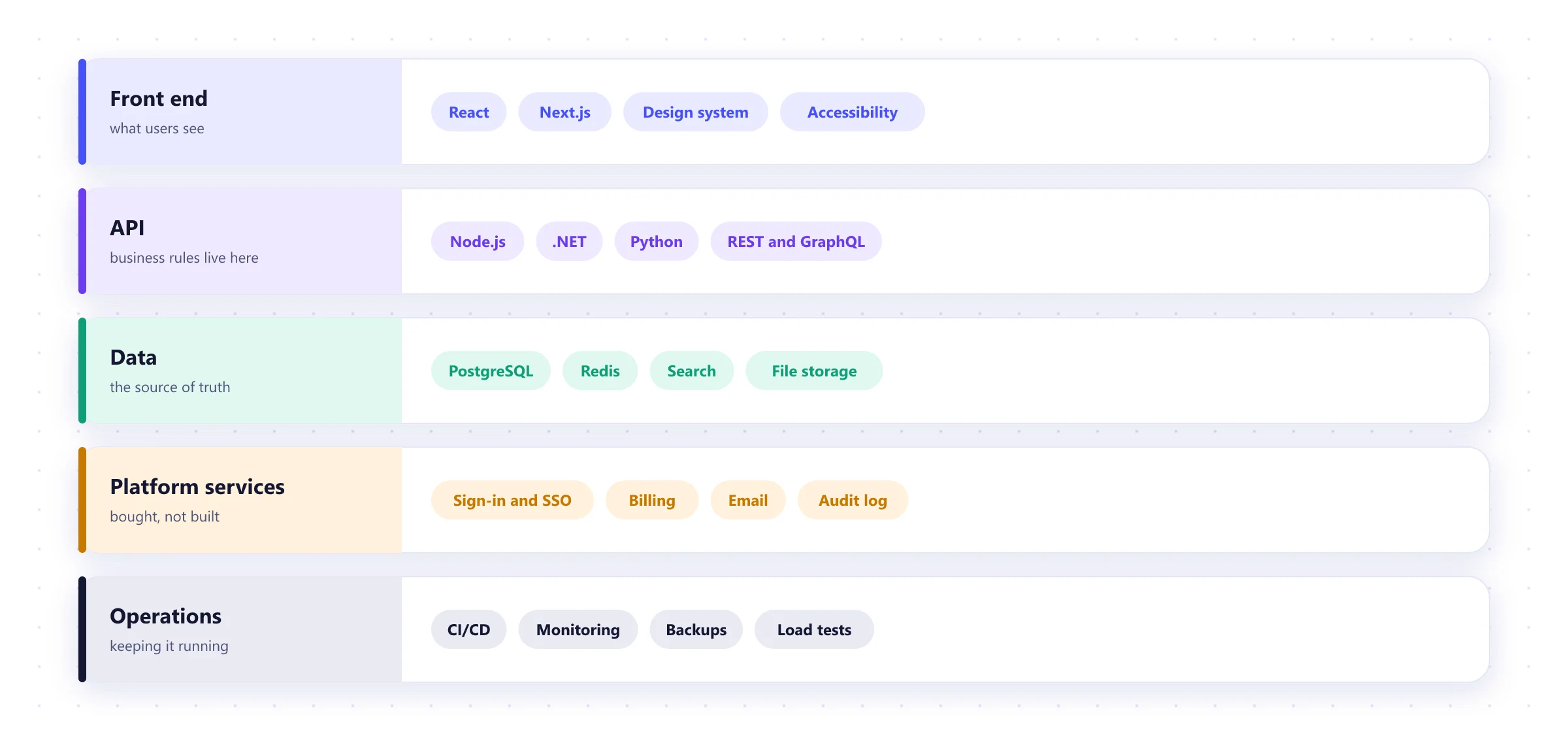
Five layers, each with a clear job
We keep business rules in the API, buy commodity services like sign-in and billing instead of building them, and set up operations before the first feature. Every significant choice is recorded in a short decision note, so the next developer knows why.
What business buyers will ask for
If you sell to companies, their IT and security teams will have a checklist. These are cheaper to build in from the start than to bolt on after the first big deal.
- Tenant isolation so one customer never sees another
- Roles and permissions that match how teams work
- Single sign-on with SAML and OpenID Connect
- An audit log of who changed what and when
- Plans, seats and invoices through Stripe
- Data export and deletion on request
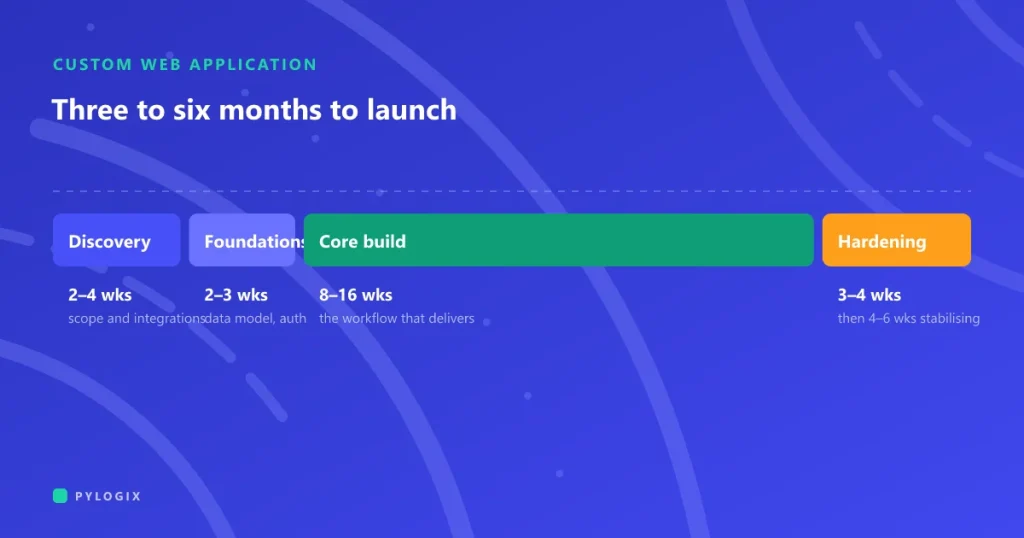
From discovery to a first release
Discovery
2 to 4 weeksUsers, roles, integrations and the riskiest feature prototyped. Ends in a scoped estimate.
Foundations
2 to 3 weeksArchitecture, environments, sign-in, CI/CD and monitoring in place.
Build
8 to 16 weeksSprints of two to three weeks, each ending in a demo on staging.
Hardening
3 to 4 weeksLoad, security and accessibility testing, plus acceptance testing with real users.
Launch
OngoingGo live with the team on hand, then iterate on what users do.
Web applications we have built
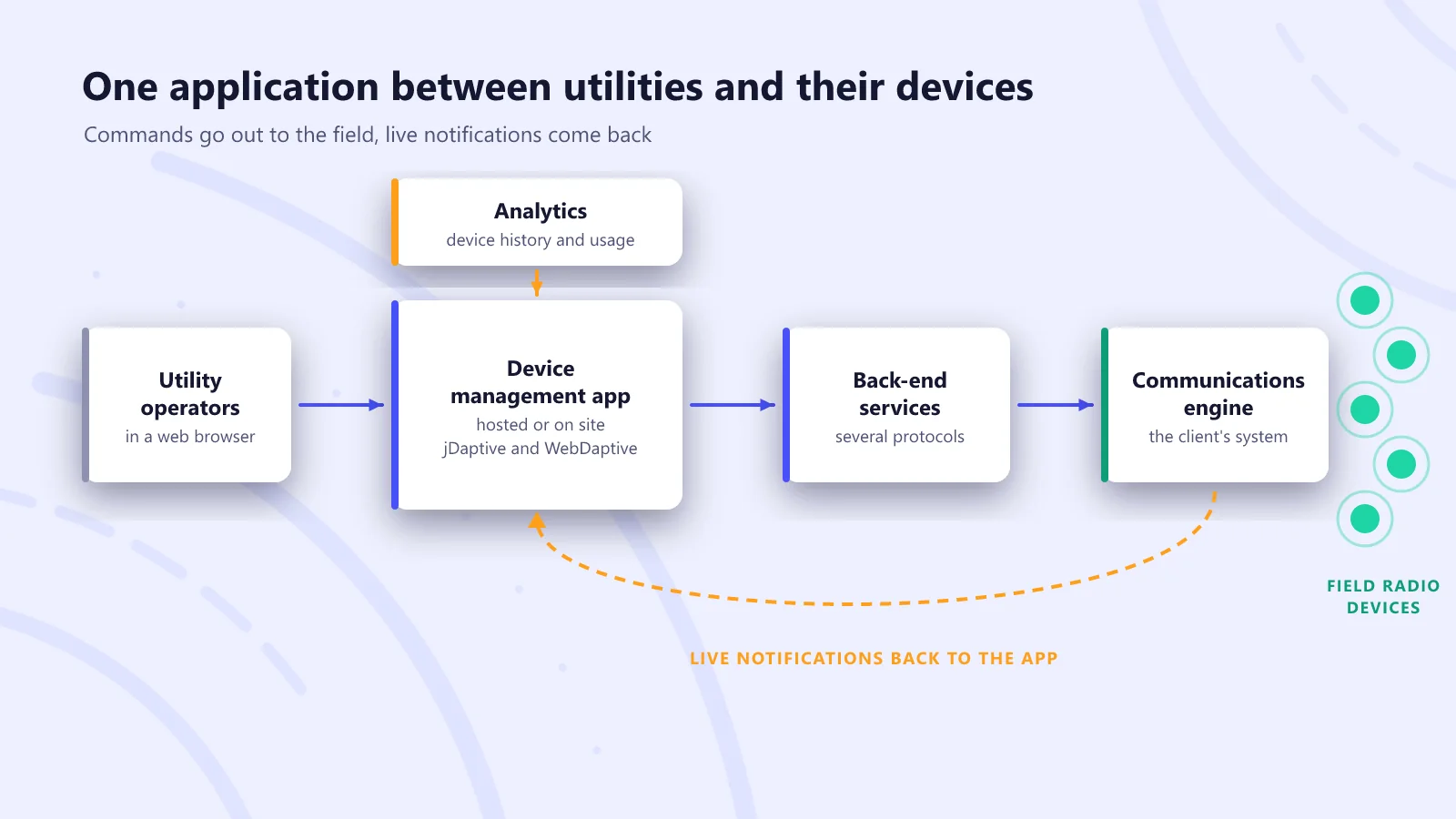
Remote management for utility field devices
A central web application that lets water and energy utilities change settings on their radio devices, or upgrade a whole territory, without a site visit.
Read the case study →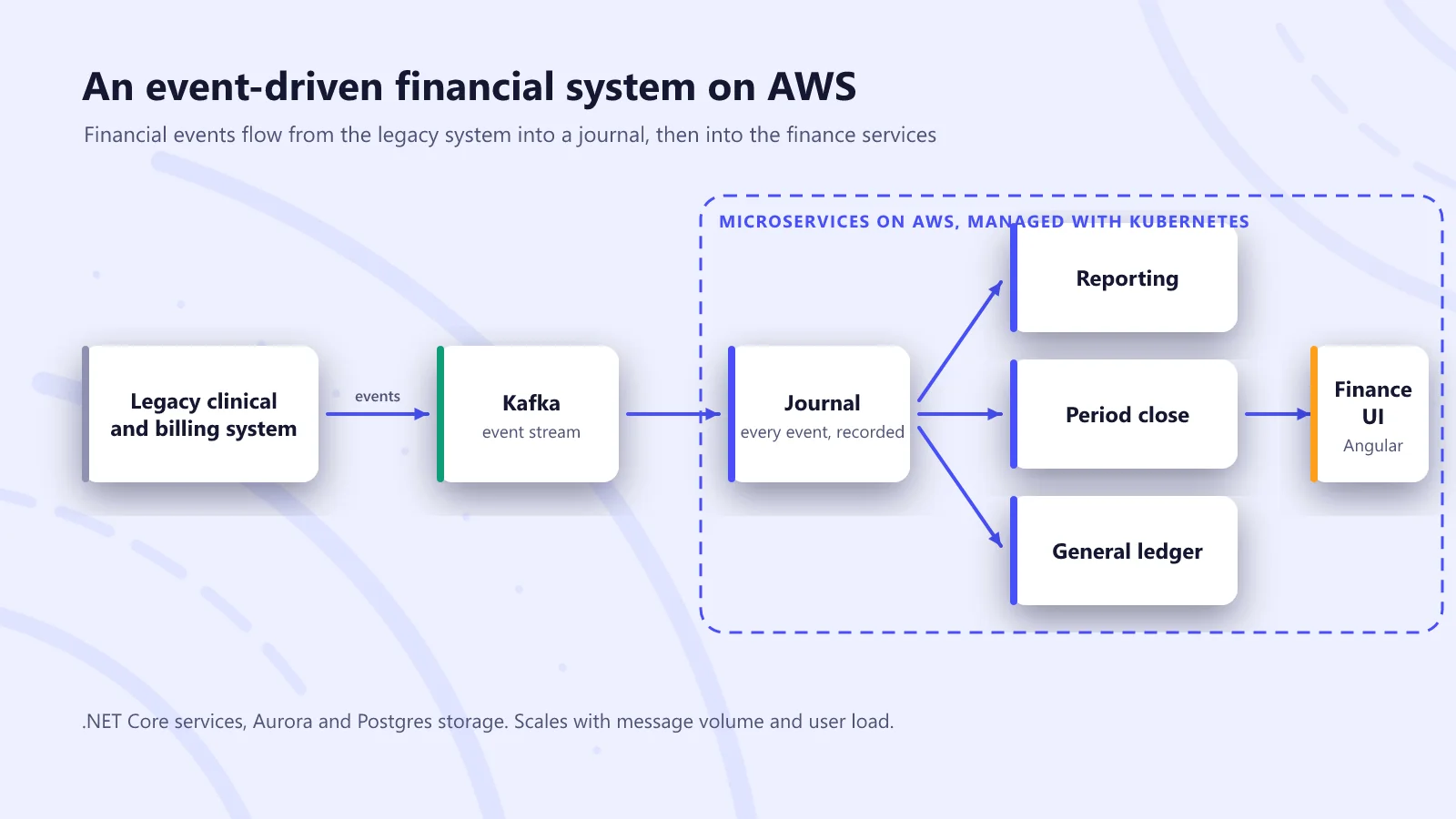
A financial system rebuilt for new CMS payment rules
An event-driven finance platform for a home health and hospice provider, delivered to a fixed regulatory deadline while the rules were still being clarified.
Read the case study →
Fair launches for limited PC drops
Starforge Systems on Shopify Plus, with a queue that keeps limited gaming PC releases fair when demand spikes.
Read the case study →What we build web applications with
Front end
- React
- Next.js
- TypeScript
- Angular
- Vue
Back end
- Node.js
- NestJS
- .NET
- Python
- Django
Data
- PostgreSQL
- Redis
- Elasticsearch
- S3
Platform
- Auth0
- Clerk
- Stripe
- Postmark
Testing
- Playwright
- Jest
- k6
- OWASP ZAP
Hosting
- AWS
- Azure
- Vercel
- Docker
Web application development FAQ
How much does a web application cost to build?
It depends on the number of user roles, screens and integrations. A focused first version of a SaaS product or internal tool is typically a few months of work for a small team. Discovery ends with a scoped estimate and a range, and our guide to development costs helps you compare it with hiring.
How long until we have a first release?
Three to six months to a first release is typical for a mid-sized application with real users, several roles and a handful of integrations. You see working software on staging every two to three weeks before that. This breakdown shows where the time goes.
Which technology stack do you use?
Usually React or Next.js on the front end with Node.js, .NET or Python behind it, and PostgreSQL for data. We choose from what your team can hire for and maintain, and we explain the choice in writing.
How do you handle security?
From the first sprint: authentication through a proven provider, role-based permissions, encrypted data, dependency scanning in the pipeline and the OWASP Top 10 as a checklist. For regulated clients we arrange an independent penetration test before launch.
Will it scale if the product takes off?
We design for the growth you expect, not ten times beyond it, so you do not pay for scale you may never need. The architecture keeps the obvious next steps open, such as read replicas, caching and background workers, and we load test before launch.
Do we own the code?
Yes. The code is in your repository from the first commit, the contract assigns all intellectual property to you, and the infrastructure runs in your own cloud account.
Worth reading before you start
 How long it takes to build a custom web application
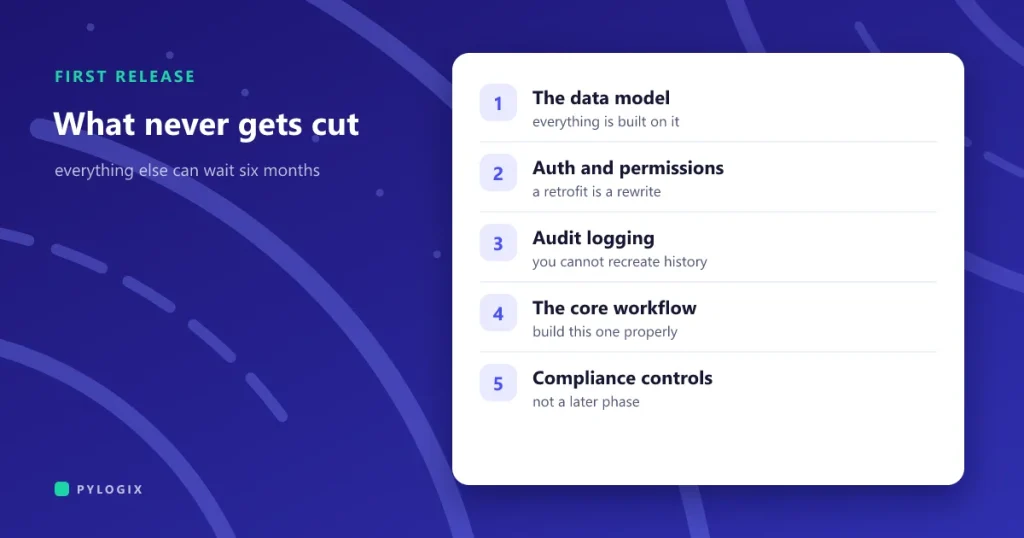 MVP scope: what to build first
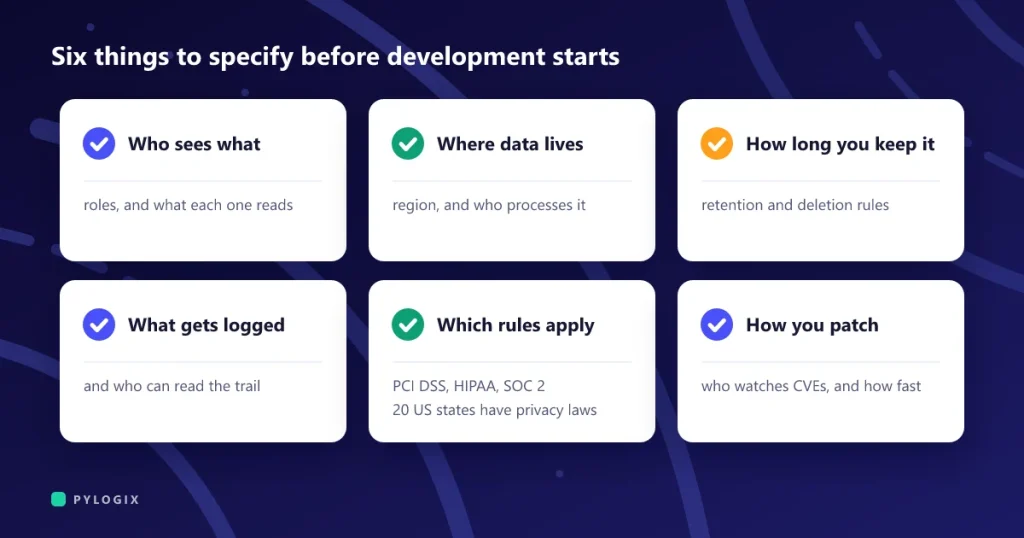 Security requirements for custom software
Tell us what you want to build
Describe the users, the main job the application does and any systems it needs to talk to. We will come back with questions and a suggested first release.