
A development team that works as part of yours
Developers, QA and a delivery lead who join your company on a monthly rate, work in your tools and follow your priorities. You get a steady team that knows your product, without months of hiring, and the size changes as your roadmap does.
- Team introduced within weeks
- Your priorities, your tools
- Code in your repository from day one
When a dedicated team makes sense
Hiring is too slow
You need people building next month, and a senior hire takes two to four months to find and start.
The roadmap keeps changing
You have a product that will keep evolving, so a fixed-scope contract would mean constant change requests.
You need a whole team
Not just developers but QA and someone to run the delivery, working together from the first sprint.
You need skills you do not have
Mobile, data, AI or DevOps experience for a stretch of work, without adding permanent headcount.
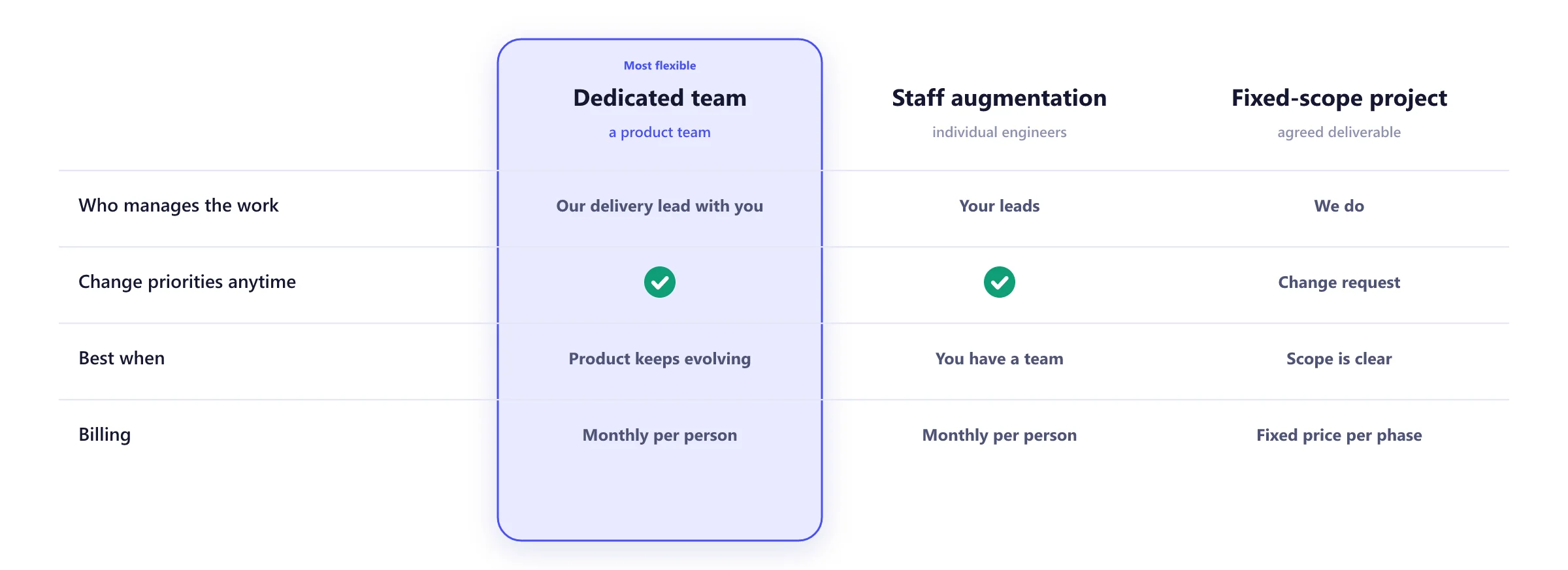
A team, extra engineers or a project
We offer all three because they suit different situations. A common path is to start with a project, then keep a dedicated team once the product is live.
A week with your team
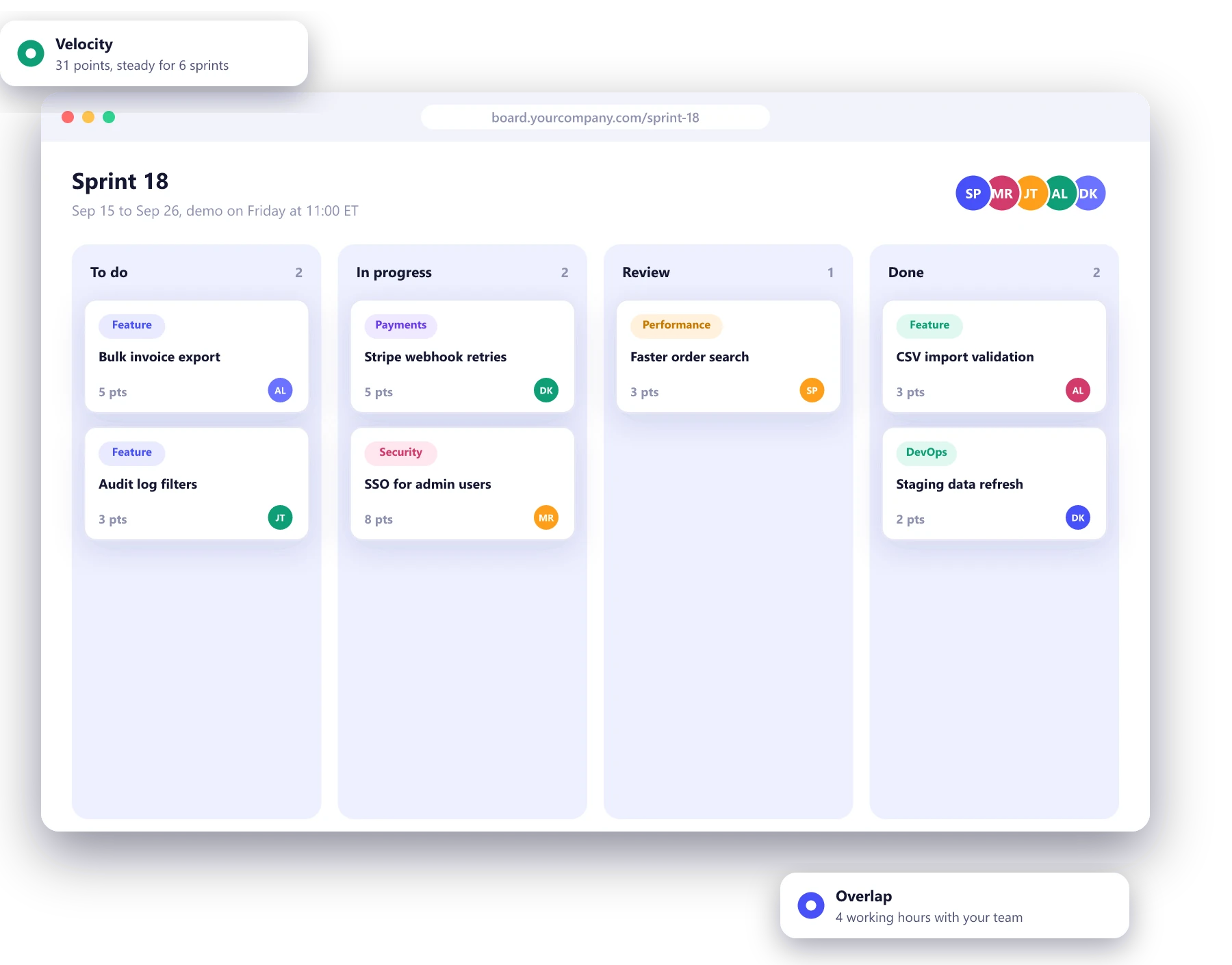
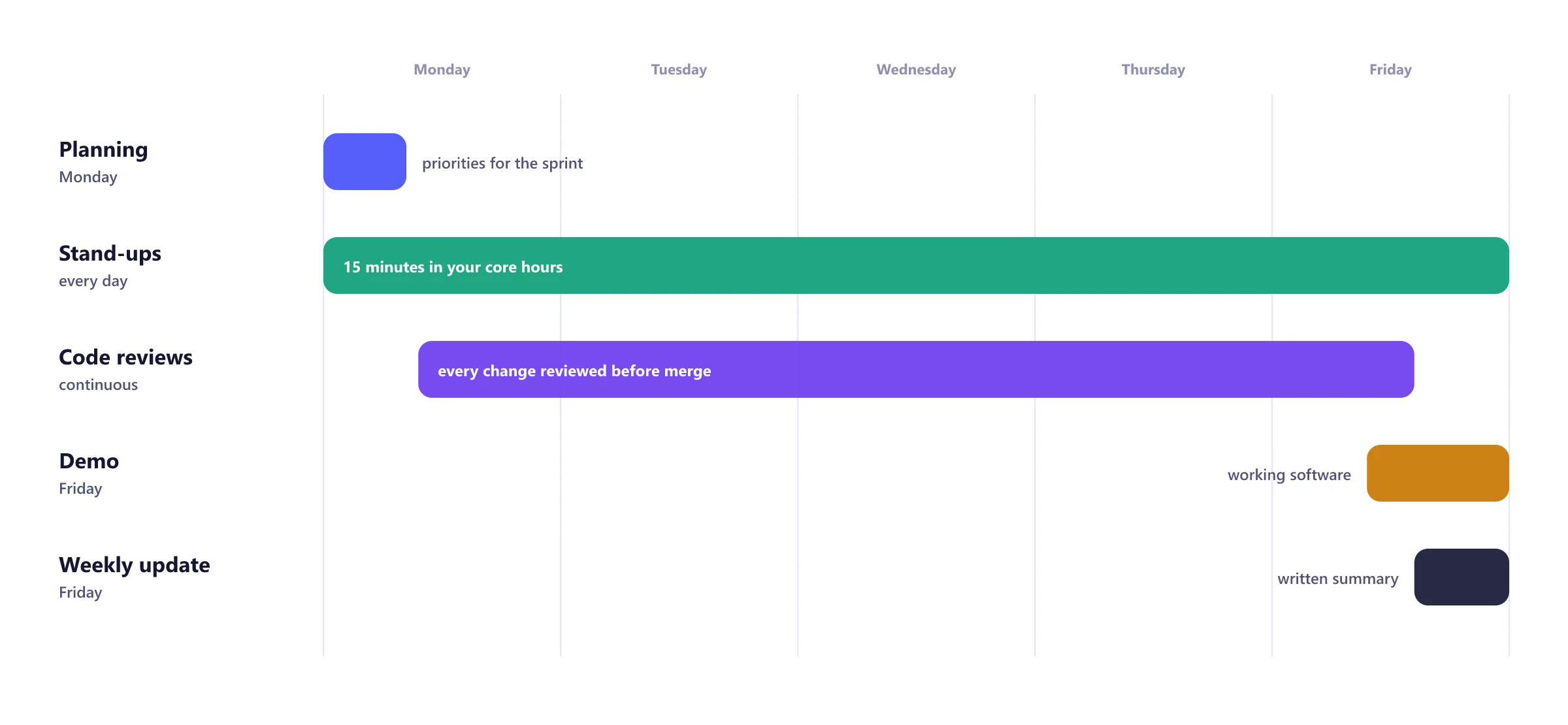
The team works in your time zone for part of every day, joins your stand-ups and uses your tools: Jira or Linear, Slack or Teams, GitHub or GitLab. Every Friday you see working software and get a written summary of the week.
Roles we staff
Software engineers
Front end, back end and full stack engineers in the languages your product already uses.
Mobile engineers
Flutter, Swift and Kotlin developers for new apps and apps already in the stores.
QA engineers
Test automation and exploratory testing, so quality does not depend on developers checking their own work.
Delivery lead
Runs the sprints, keeps the backlog honest and writes the weekly update.
Data and AI specialists
Data engineers and data scientists for pipelines, models and AI features.
DevOps engineers
Pipelines, infrastructure and monitoring, part time or full time.
Teams in action
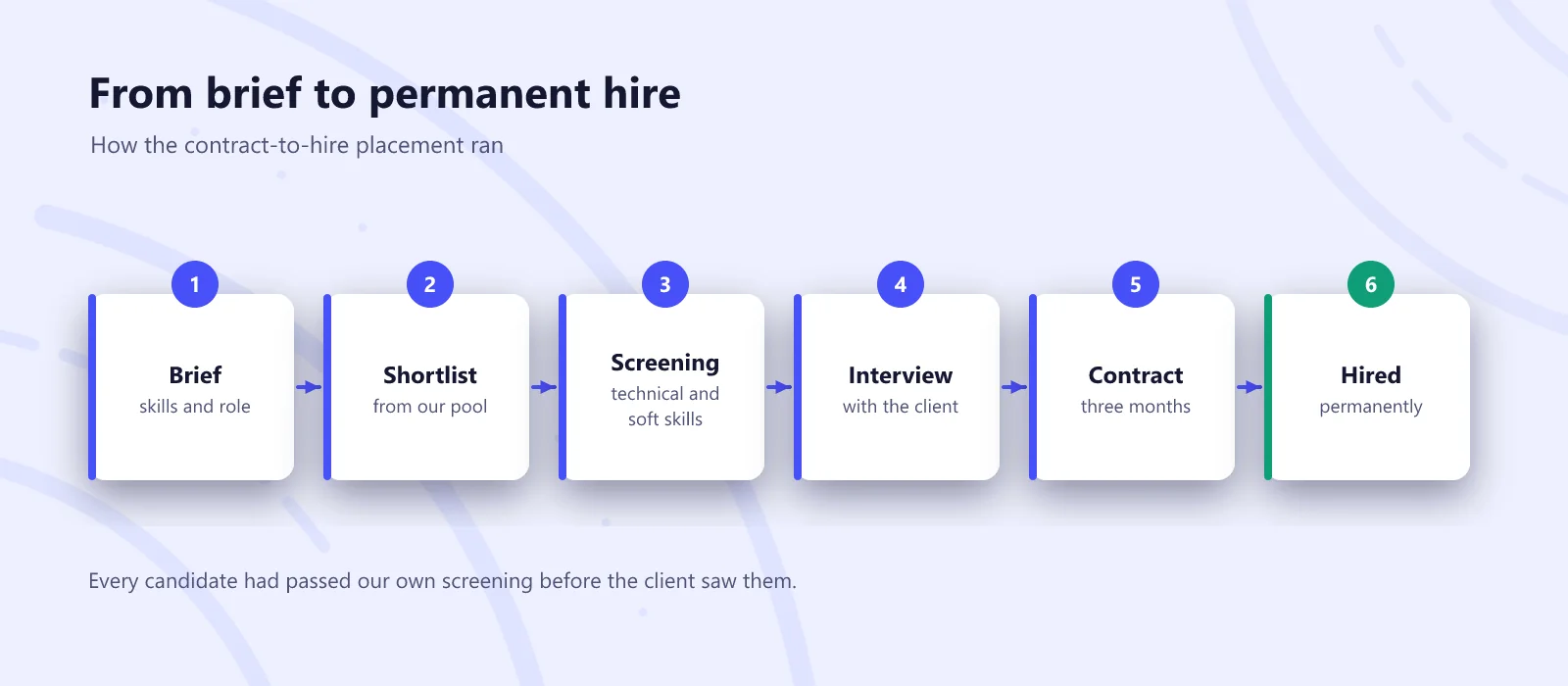
A contract-to-hire .NET developer who stayed
A screened shortlist for a secure document management company. The developer they chose joined on a three-month contract and was then hired permanently.
Read the case study →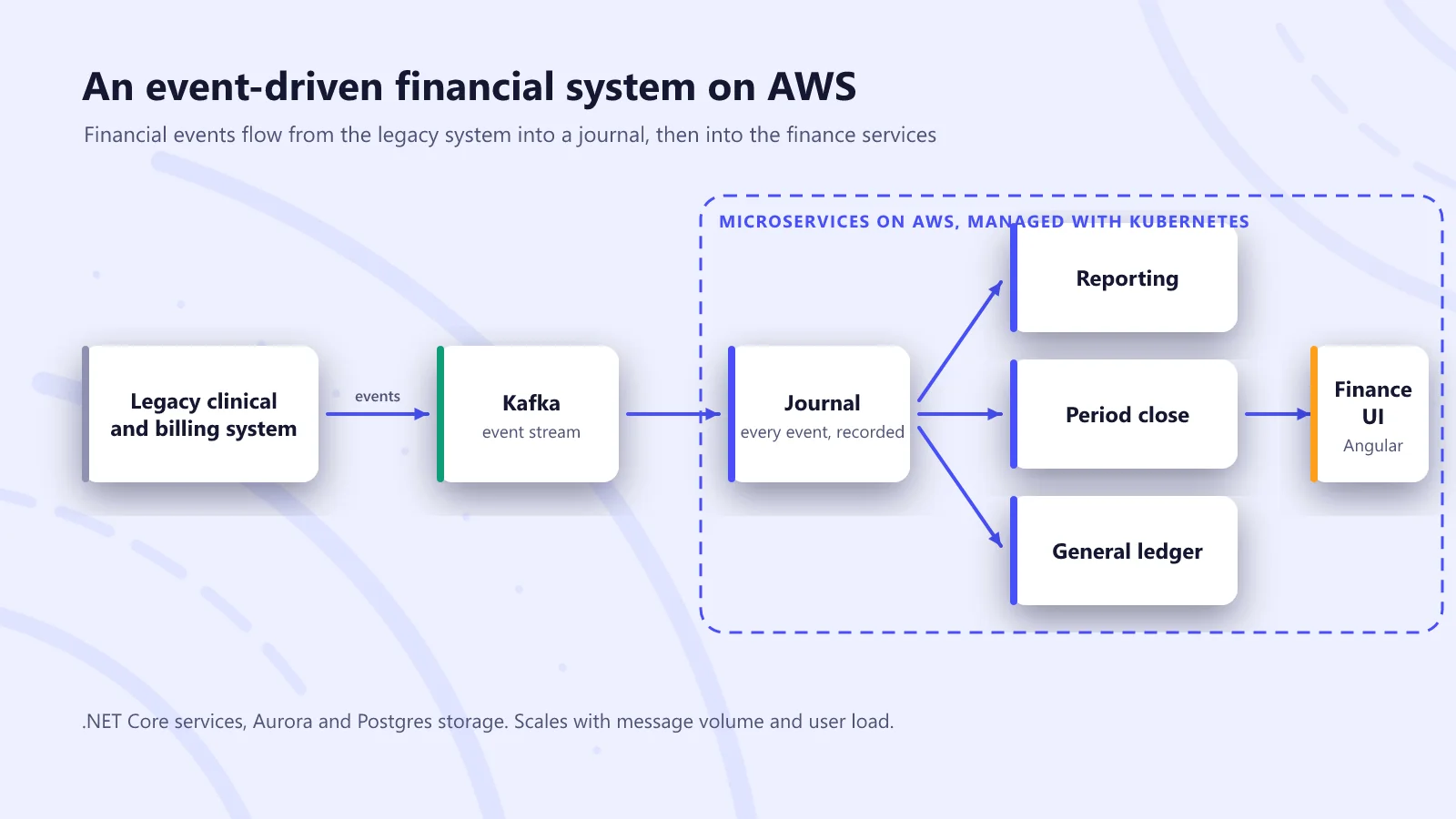
A financial system rebuilt for new CMS payment rules
An event-driven finance platform for a home health and hospice provider, delivered to a fixed regulatory deadline while the rules were still being clarified.
Read the case study →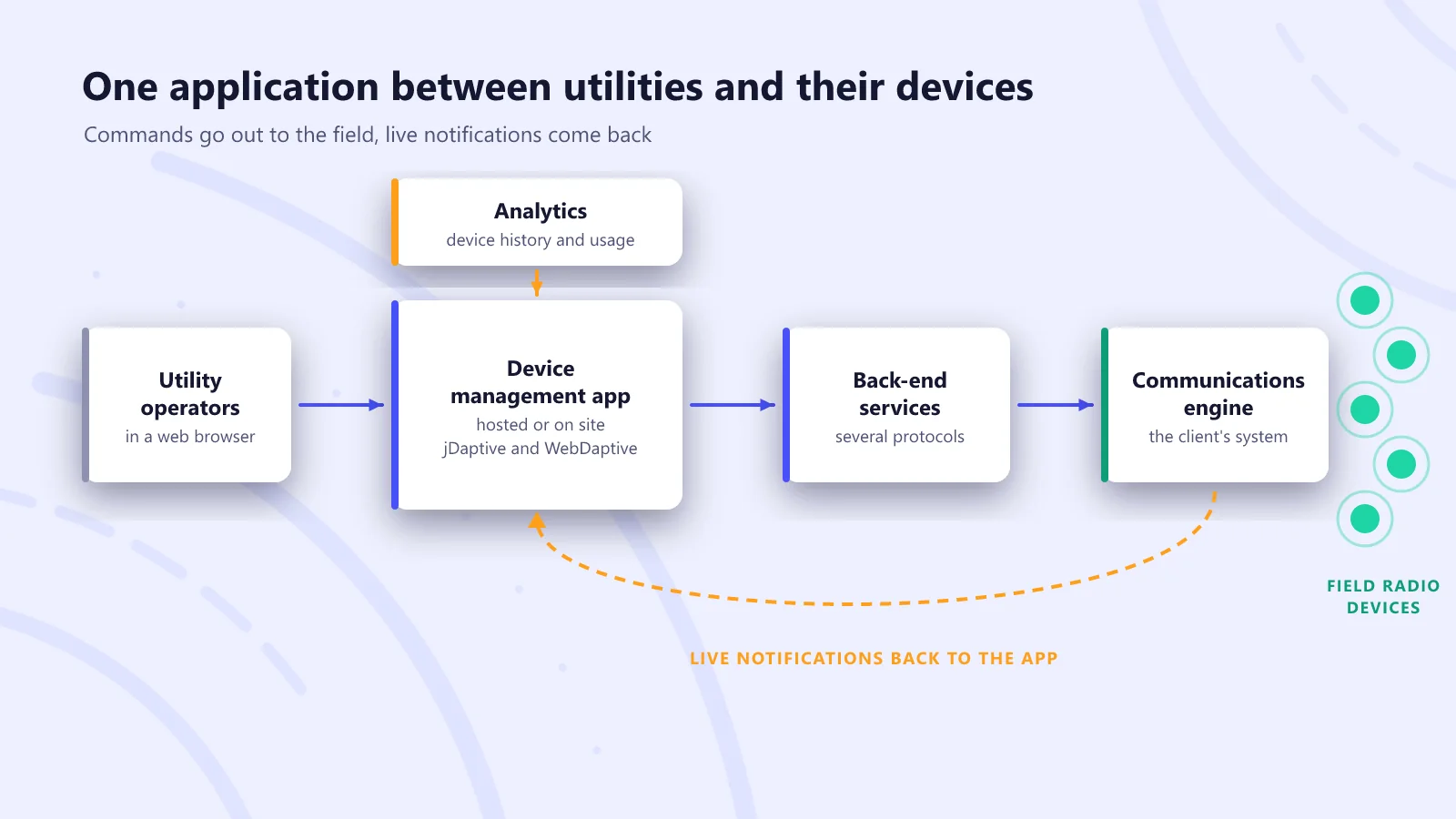
Remote management for utility field devices
A central web application that lets water and energy utilities change settings on their radio devices, or upgrade a whole territory, without a site visit.
Read the case study →Everything we build is yours
When a project ends, you should be able to hire anyone to carry it on. We set things up that way from the first week. More on this in what you should own when a build ends.
- Source code in your repository from the first commit
- Full IP assignment written into the contract
- Infrastructure in your own cloud account, billed to you
- Architecture notes, runbooks and API docs kept current
- Automated tests and deployment pipelines that run without us
- A handover plan if you bring the work in-house
Dedicated development team FAQ
What is the difference between a dedicated team and staff augmentation?
A dedicated team is a complete product team, usually developers, QA and a delivery lead, that owns a product or workstream and works to your priorities. Staff augmentation adds individual engineers to a team you already run and manage. We offer both, and contract-to-hire if you want to hire someone permanently later.
How quickly can a team start?
Usually within two to four weeks of agreeing the roles, depending on the skills needed. We introduce each person before they start, and you can interview them if you want to.
How much does a dedicated team cost?
It is a monthly rate per person, set by role and seniority. Compared with hiring, you avoid recruitment time and cost and can change the team size as the roadmap changes. Our breakdown of what a developer really costs helps with the comparison.
How do we stay in control of the work?
You set the priorities. The team works in sprints with planning, demos and retrospectives you attend, in your tools, with a written update each week. The code lives in your repository from the start.
What working hours do the team keep?
We agree a daily overlap with your core hours before the team starts, so stand-ups, reviews and questions happen in real time. The rest of the day is focused build time.
Can we change the team size or end the engagement?
Yes. Team size follows your roadmap, with notice periods agreed in the contract. If you bring the work in-house, we run a structured handover so nothing is lost.
Worth reading before you start
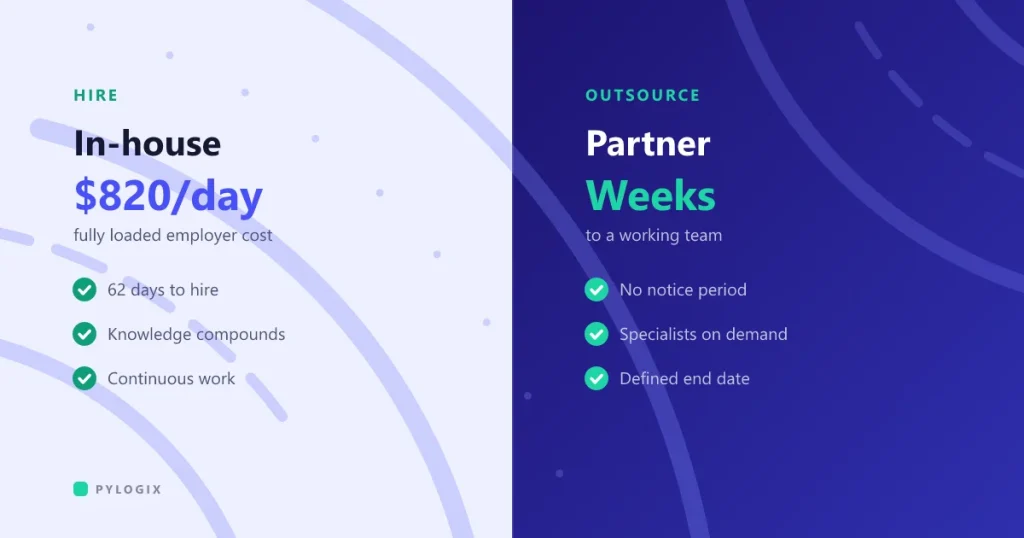 In-house or outsourced software development
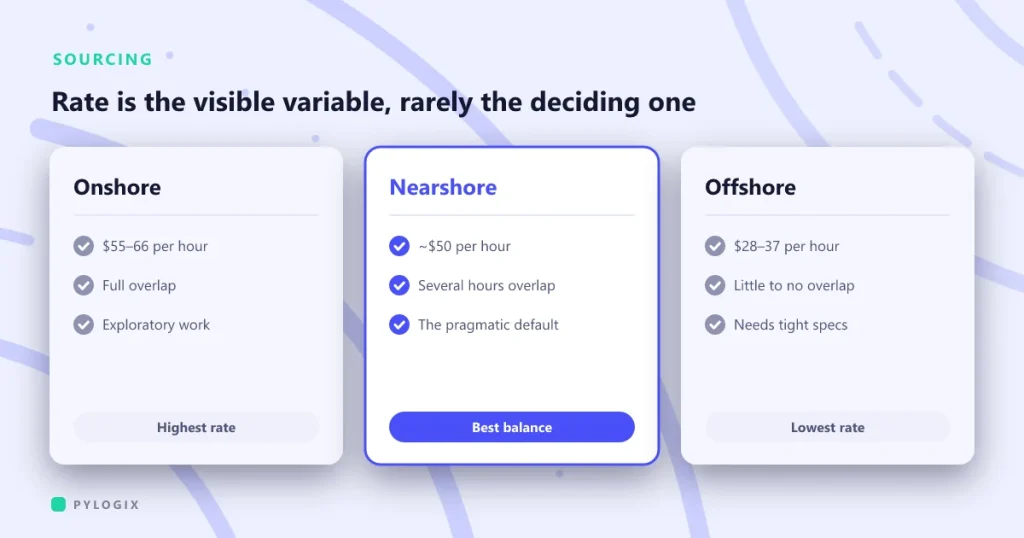 Onshore, nearshore or offshore development
 How to choose a software development partner
Tell us who you need
Roles, skills and how long you expect to need them. We will come back with a suggested team shape, a monthly rate and when they could start.