
Mobile apps people keep on their home screen
We design, build and release iOS and Android apps, and keep them working through every OS update. Native Swift and Kotlin when the app needs it, Flutter when one codebase will do the job, and a straight answer about which one you need.
- A clickable prototype in the first weeks
- App Store and Google Play releases handled
- Offline, push and payments done properly
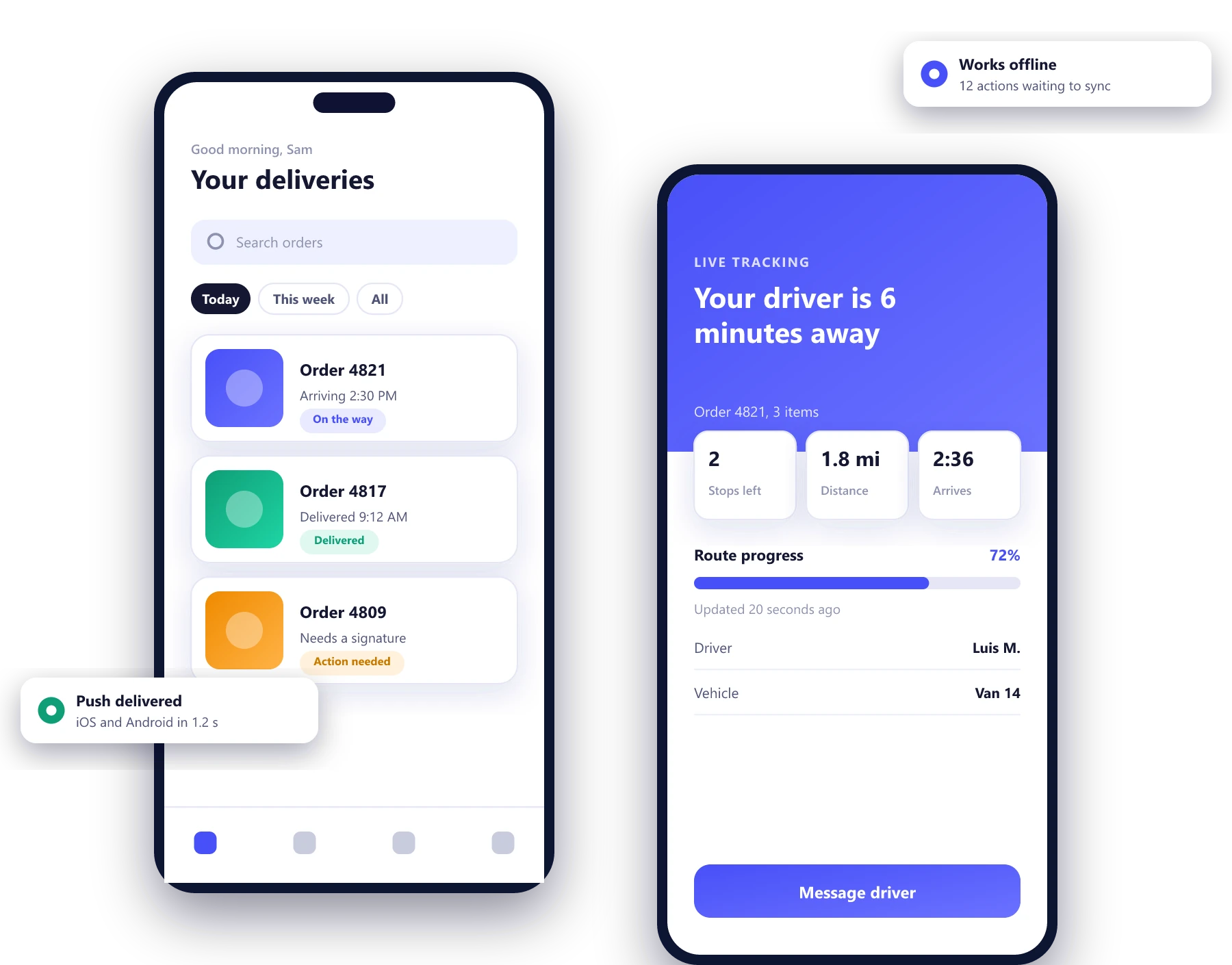
Apps for customers, staff and everything in between
Customer apps
Ordering, booking, loyalty and account apps that make the thing people already do with you quicker on a phone.
Field and staff apps
Offline forms, barcode scanning, photos and signatures for people who work away from a desk, synced when a signal comes back.
Marketplaces and social apps
Profiles, feeds, chat, live video and payments between users, with the moderation tools to keep it healthy.
See SoundConnex Live →Companion apps for hardware
Bluetooth and Wi-Fi pairing, firmware updates and device dashboards for products that live in the real world.
Subscription and content apps
Paywalls, in-app purchases and subscriptions that follow App Store and Google Play rules, plus video and audio playback.
Internal tools on mobile
Approvals, dashboards and alerts from your existing systems, so managers can act without opening a laptop.
Native, Flutter or React Native?
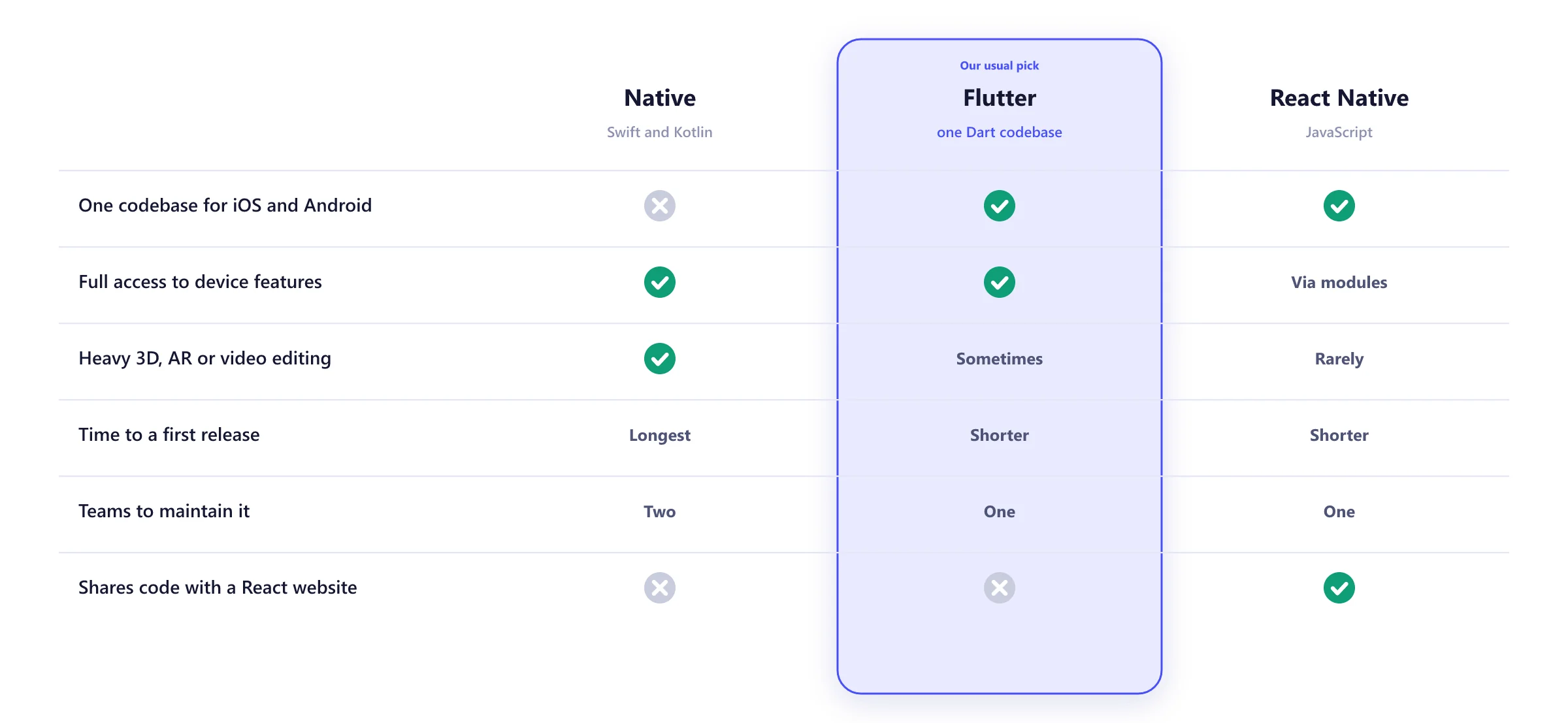
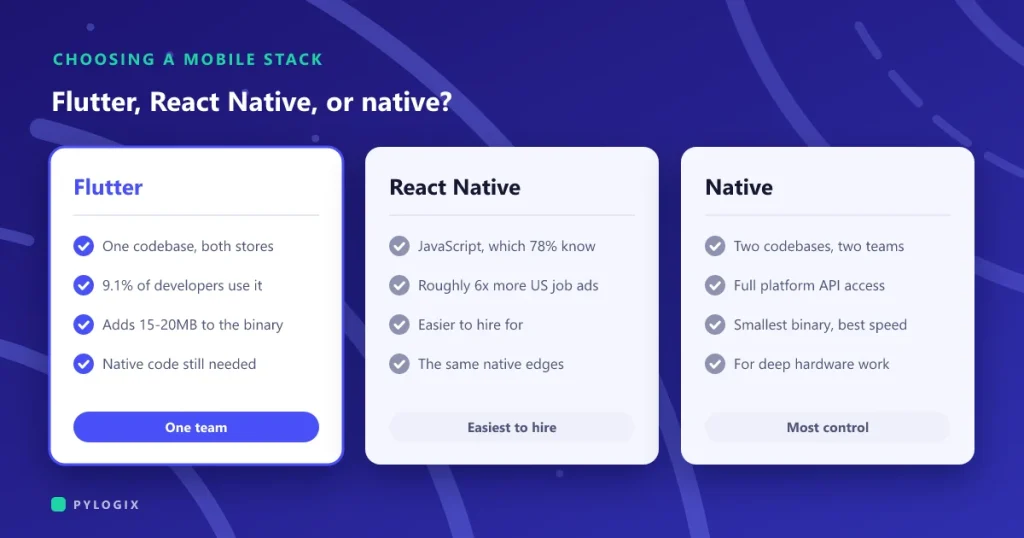
Most apps do not need two separate native codebases. Some do. We recommend one approach during discovery and explain why in writing. The long version is in Flutter or native app development.
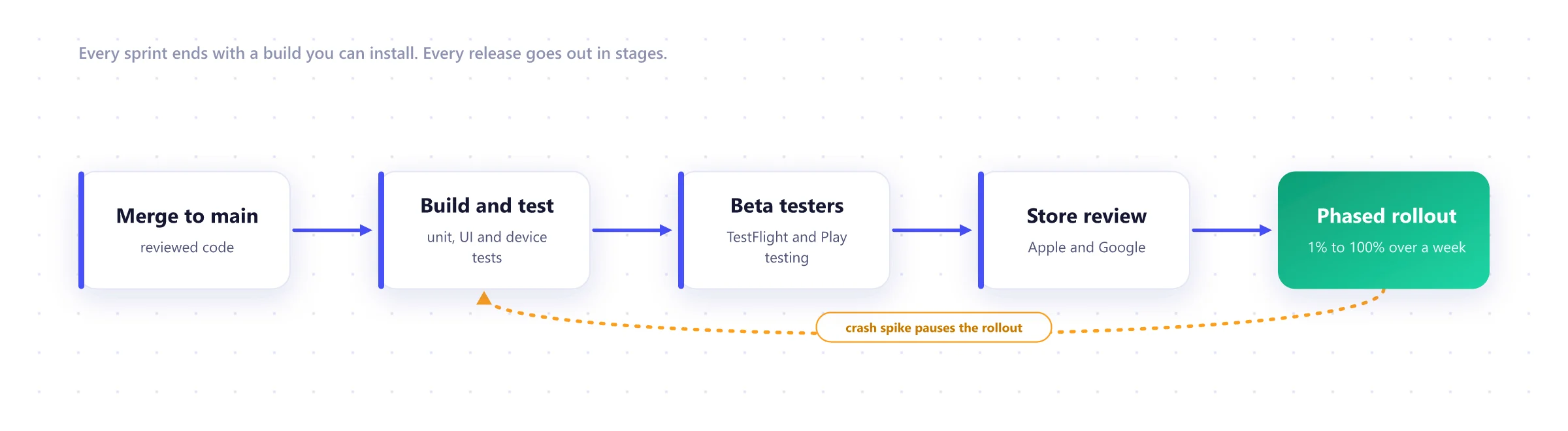
A build you can install at the end of every sprint
You will not wait months to hold the app. From the second sprint, every build goes to TestFlight and Google Play testing so you and a few real users can try it. Releases go out to a small share of users first, and we stop the rollout if crash rates move.
From idea to the app stores
Discovery
2 to 4 weeksUser journeys, a clickable prototype tested with real users and a scoped estimate.
Design
2 to 4 weeksScreens and a component library for both platforms, with accessibility built in.
Build
8 to 16 weeksTwo to three week sprints, each ending in a build on your phone.
Release
1 to 2 weeksStore listings, screenshots, review submission and a phased rollout.
Grow
OngoingCrash monitoring, analytics, OS updates and the next features.
Apps we have designed and built

KITH, built for Monday drops
A redesigned Shopify Plus store and an iOS app designed around the weekly release that brings shoppers back.
Read the case study →
Ticketed live shows for musicians and fans
A social app where artists sell virtual tickets to live online performances and chat with the fans who turn up.
Read the case study →
Live streaming with multi-guest rooms
A Flutter app for iOS and Android with group video calls, live chat, virtual gifts that hosts can cash out, and weekly leaderboards.
Read the case study →Where mobile apps usually go wrong
Screens are the visible part. These are the details that decide whether people keep the app or delete it, and we plan for each of them from the start.
- Offline mode that syncs without losing or duplicating work
- Push notifications people find useful enough to keep on
- In-app purchases that pass App Store and Google Play review
- Accessibility with Dynamic Type, VoiceOver and TalkBack
- Crash reporting and alerts from the first beta
- Yearly OS updates tested before they reach your users
What we build mobile apps with
Cross-platform
- Flutter
- Dart
- React Native
- TypeScript
Native
- Swift
- SwiftUI
- Kotlin
- Jetpack Compose
Backend
- Node.js
- Python
- Firebase
- Supabase
- GraphQL
Payments
- StoreKit
- Google Play Billing
- Stripe
- RevenueCat
Release
- Fastlane
- Codemagic
- GitHub Actions
- TestFlight
Quality
- Sentry
- Firebase Crashlytics
- Maestro
- XCTest
Mobile app development FAQ
How much does it cost to build a mobile app?
It depends on the number of screens, the integrations and whether you need one platform or two. A focused first version with sign-in, a handful of core screens and one integration is a few months of work for a small team. We give you a scoped estimate with a range after discovery, before you commit to the build.
Should we build native or cross-platform?
Cross-platform, usually with Flutter, is the right call for most business and consumer apps because one team maintains one codebase. Native Swift and Kotlin earn their cost when the app leans hard on the device: heavy graphics, AR, advanced camera work or deep OS integrations. Our guide to Flutter or native goes through the trade-offs.
How long does it take to launch an app?
A first release usually takes three to five months, including two to four weeks of discovery and prototyping and time for App Store and Google Play review. Store review itself is typically a day or two, but a rejection can add a week, so we plan for it.
Will the app be published under our own accounts?
Yes. The app is released from your Apple Developer and Google Play accounts, and you own the code, the signing keys and the store listings. We can set the accounts up with you if you do not have them yet.
Can you take over an app another team built?
Yes. We start with a short audit of the code, the build pipeline and the crash reports, then tell you what is worth keeping, what needs fixing first and what it will cost to carry on.
What happens after launch?
Apple and Google ship major OS updates every year, and apps that are not maintained start to break. We offer support plans that cover OS updates, crash fixes, dependency upgrades and small improvements.
Worth reading before you start
 Flutter or native app development
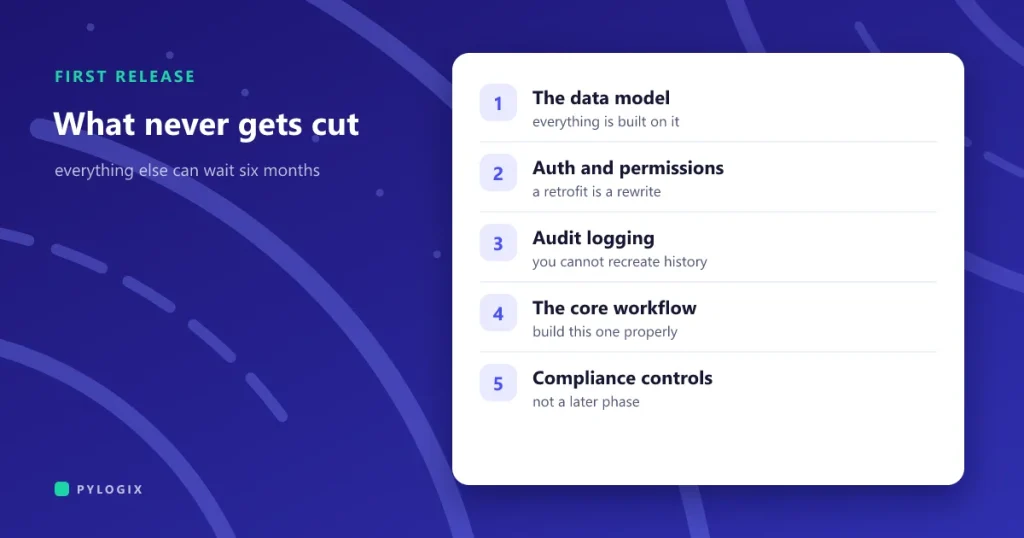 MVP scope: what to build first
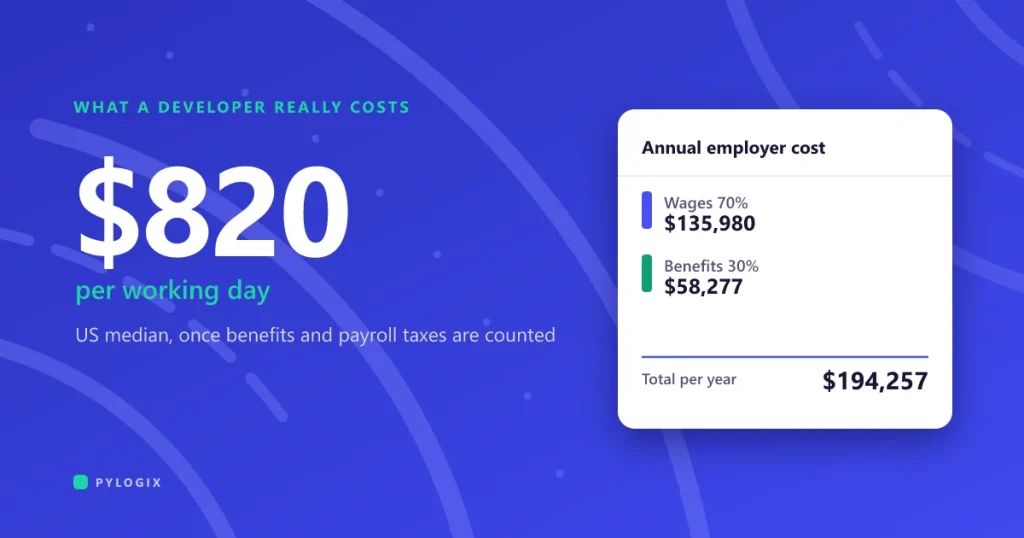 How much custom software development really costs
Tell us about the app you have in mind
Send us the idea, a sketch or an app you like. We will come back with questions, a suggested approach and what the first release could include.