
Custom software built around how your business runs
When the tools you can buy stop fitting, we design and build the software that does. Operations platforms, customer portals, SaaS products and the integrations that tie your systems together, delivered in short sprints you can see and steer.
- Fixed-price discovery before you commit
- A working release every 2 to 3 weeks
- You own the code and the IP
Brands we have worked with
- KITH
- Bulgari
- Badgley Mischka
- Simmons
- TomboyX
- Sea to Summit
- HAUS
Signs you have outgrown off-the-shelf software
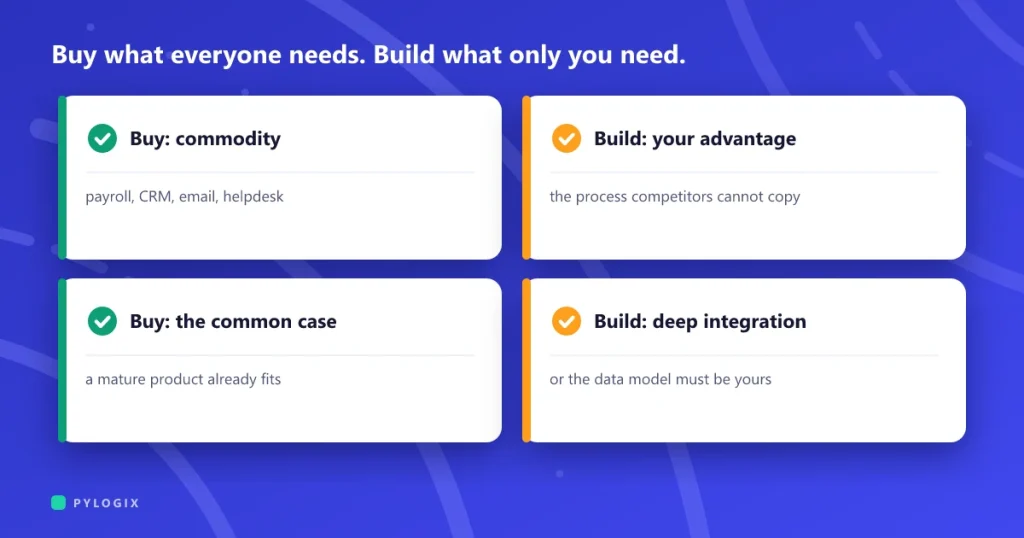
Buying software is usually the right first move. It is cheaper, it is ready now and someone else maintains it. Custom software earns its place when the way you work is your advantage, or when stitching products together costs more than building the piece in the middle.
Your process lives in spreadsheets
The real work happens in exports, copy and paste and a shared sheet only two people understand. Every handoff is a chance for an error.
You pay for five tools to do one job
Each subscription covers part of the workflow and your team fills the gaps by hand. The licence bill grows every year and the gaps stay.
The software sets your rules
You changed how you work to fit a product. That is fine for the routine parts. It hurts when the workaround is the thing that sets you apart.
Your systems do not talk
Orders, stock and invoices sit in separate places, so every report is out of date by the time anyone reads it.
Software for the work that makes you different
Most of our projects fall into one of these six shapes. Many combine two or three of them.
Operations platforms
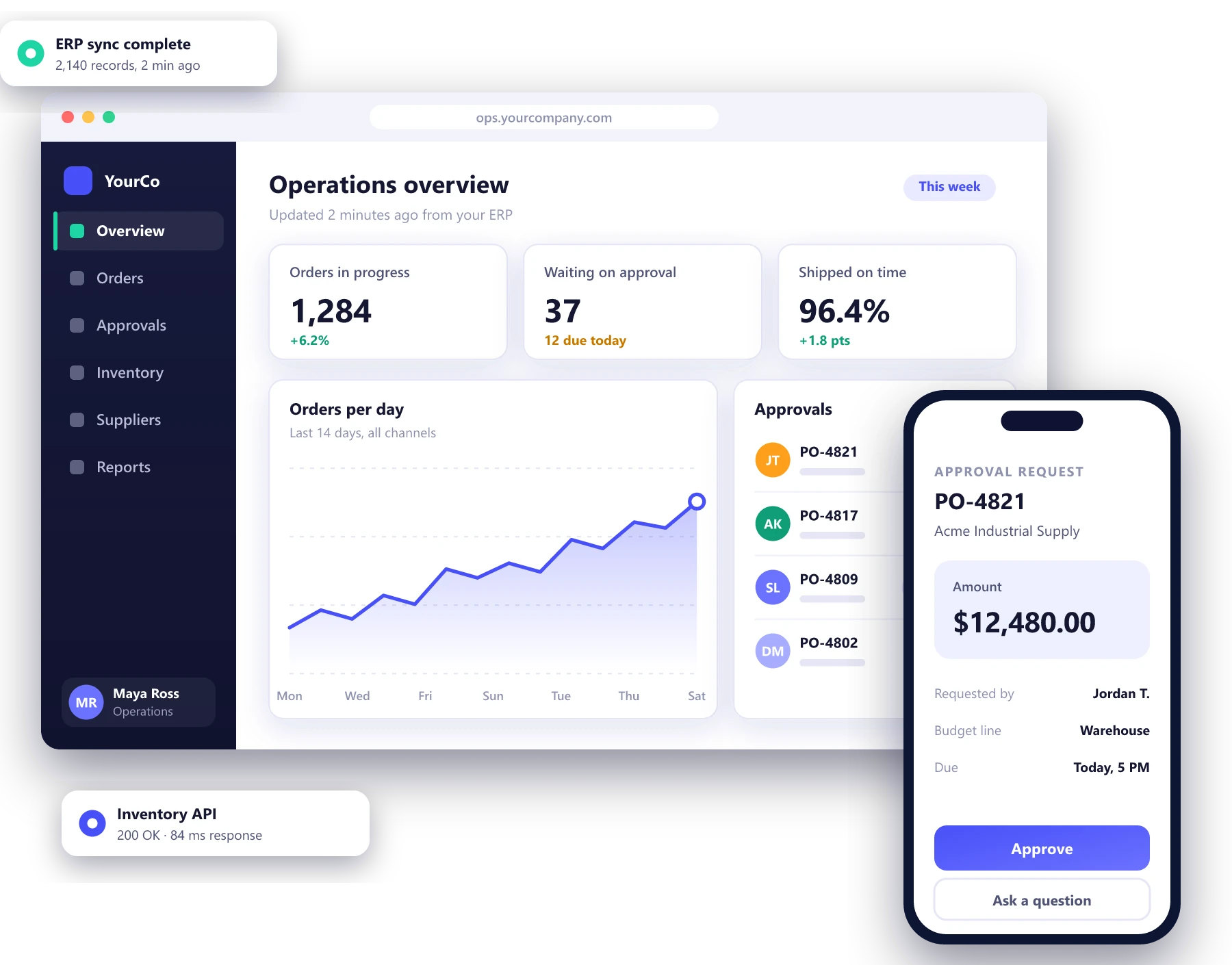
Order management, scheduling, approvals and inventory tools shaped around your real process, with the right roles and permissions for every team.
For example: replacing a web of spreadsheets with one system of record for a distribution business.
Customer and partner portals
Self-service portals where customers place orders, track jobs, download documents and raise requests without phoning your team.
For example: a portal where utility customers configure and upgrade their own field devices.
SaaS products
Multi-tenant web products with billing, onboarding and admin tools, built so your hundredth customer does not force a rewrite.
How to scope a first version →Integrations and APIs
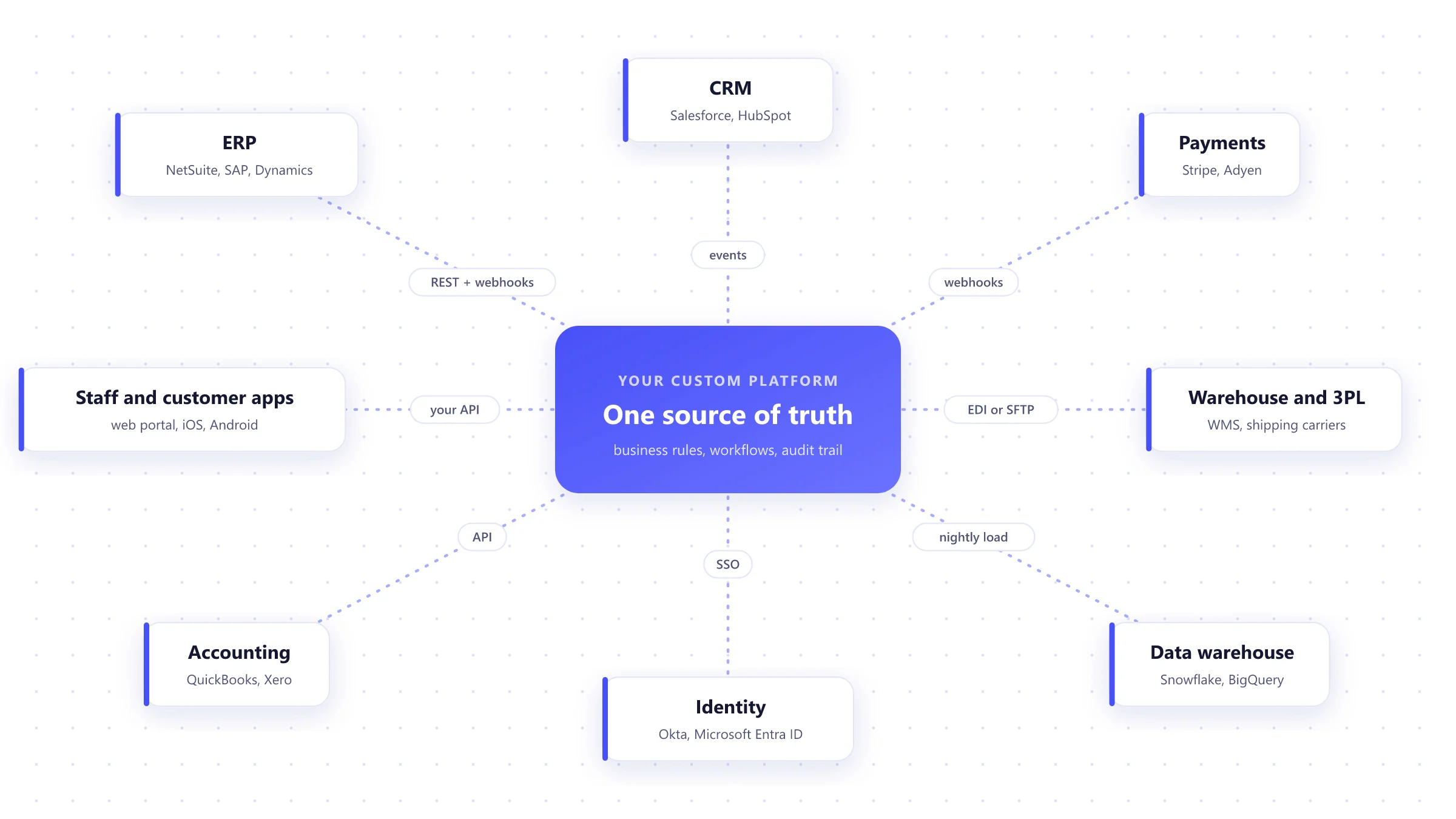
The layer between your ERP, CRM, payments and warehouse, with retries, logging and alerts so a failed sync gets noticed the same day.
What integration really costs →Data and reporting
Dashboards and reports that pull from every system you run, so the numbers in the Monday meeting match the numbers in the ledger.
AI features
Document extraction, search over your own data and assistants inside your tools, built with the testing and cost controls production needs.
AI and machine learning →Software that fits into what you already run
In most custom builds, the connections to other systems take more time than the screens. We map every system your platform has to talk to in the first weeks and test each integration against real data early. The sync jobs get retries and alerts, so a failed nightly load is fixed before anyone opens a stale report.
From first call to a live system in months
A mid-sized application usually reaches its first release in three to six months. This is where that time goes. The same durations are explained in our guide to the discovery phase.
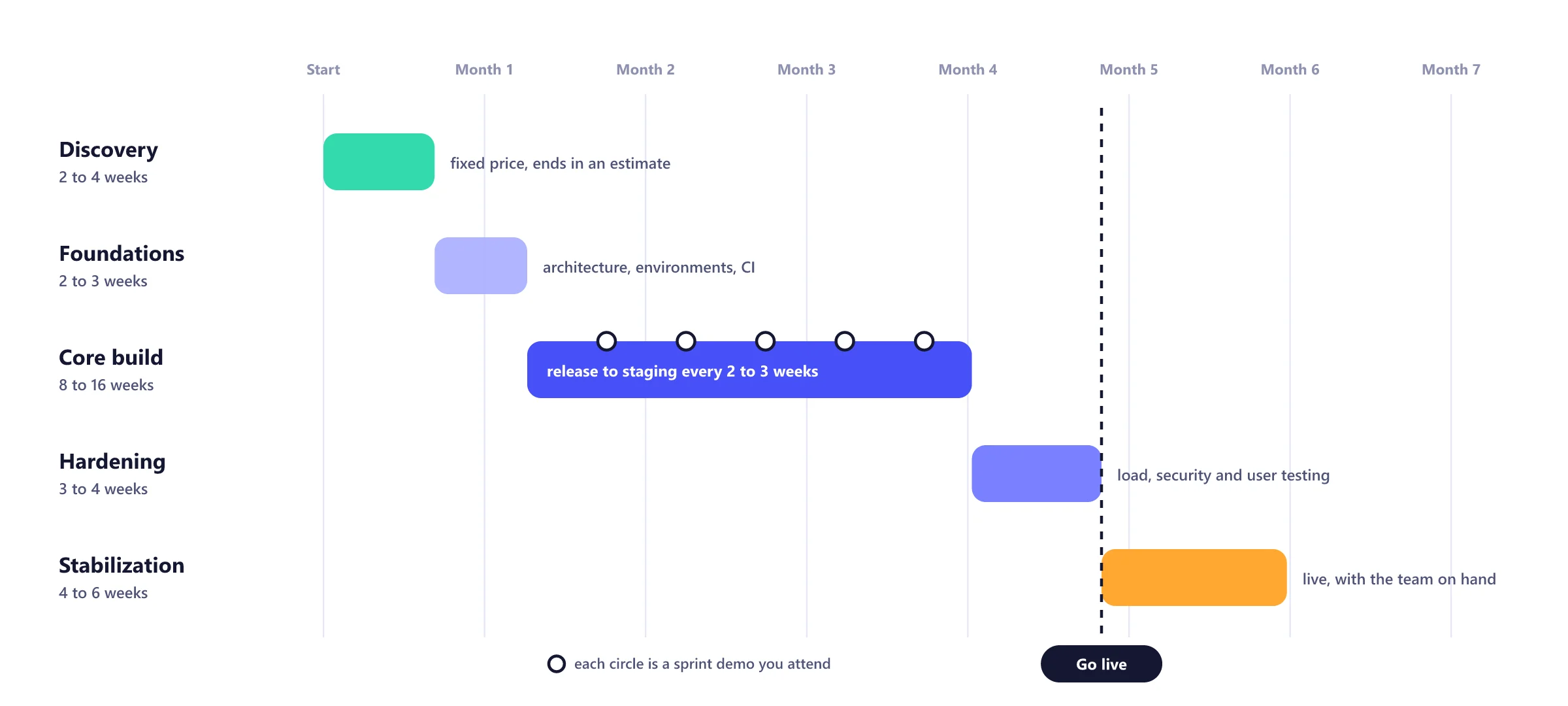
Discovery
2 to 4 weeksWe watch your team work, map the integrations and prototype the riskiest part. Fixed price, ending in a scoped estimate. You can stop here and keep everything.
Foundations
2 to 3 weeksArchitecture, hosting, environments, automated tests and deployment pipelines, all in place before feature work starts.
Build
8 to 16 weeksSprints of two to three weeks, each ending in a demo on staging. You see working software and reorder priorities as you learn.
Hardening
3 to 4 weeksLoad testing, a security review, accessibility checks and acceptance testing with the people who will use it.
Launch and support
4 to 6 weeksWe go live with the team still on hand and fix what real traffic finds. Then we hand over, or move to a support plan.
Custom software we have delivered
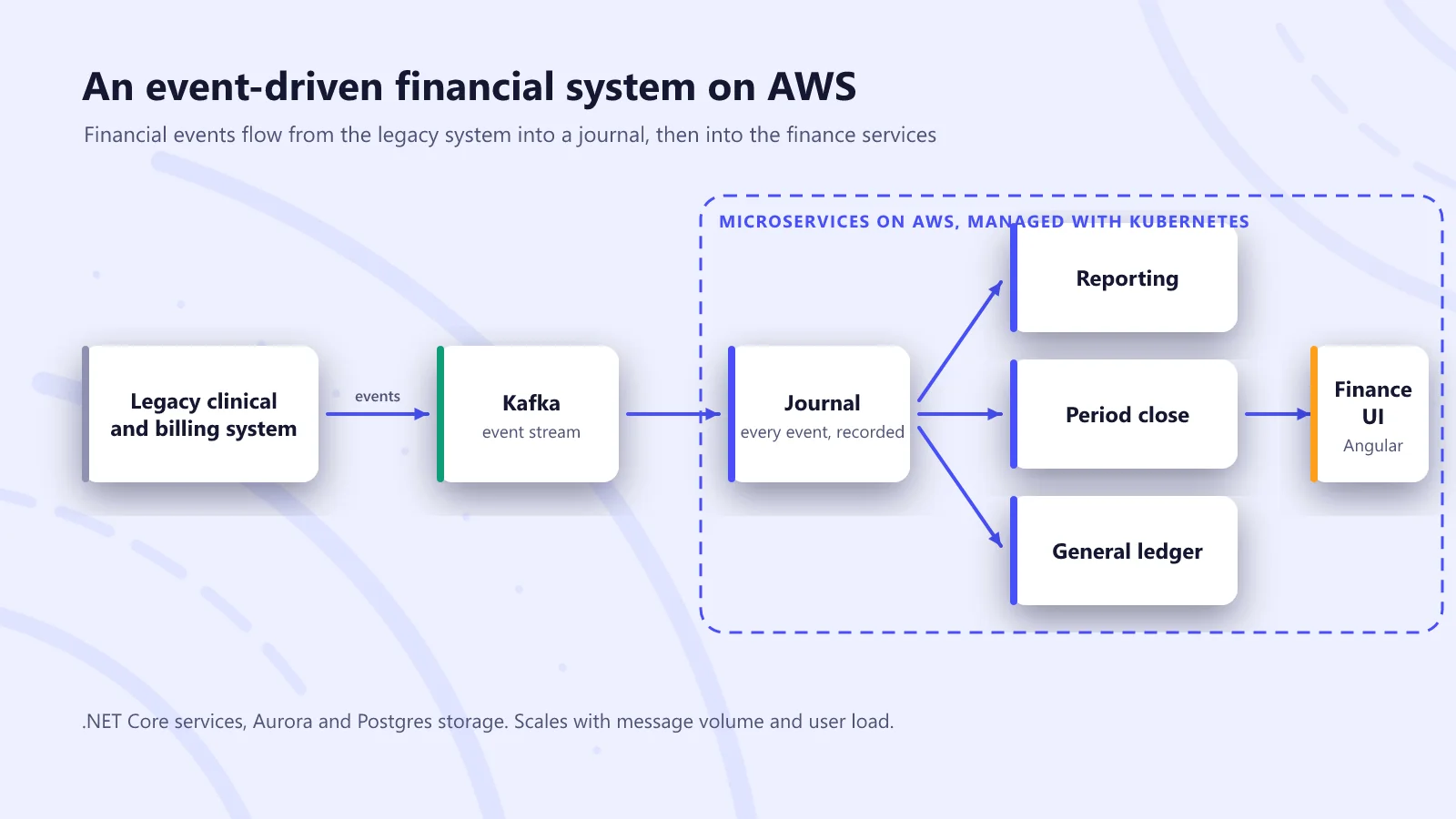
A financial system rebuilt for new CMS payment rules
An event-driven finance platform for a home health and hospice provider, delivered to a fixed regulatory deadline while the rules were still being clarified.
Read the case study →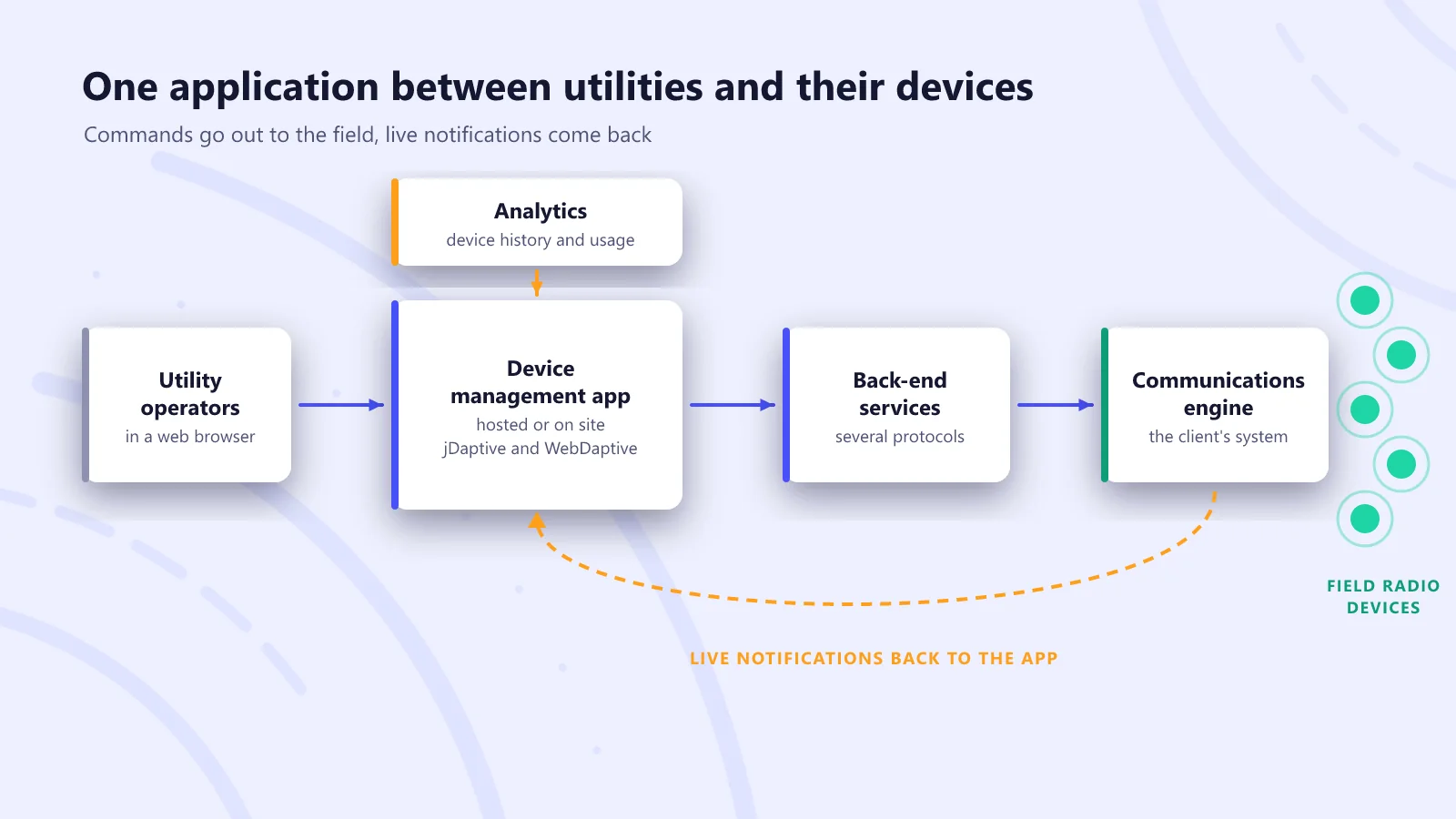
Remote management for utility field devices
A central web application that lets water and energy utilities change settings on their radio devices, or upgrade a whole territory, without a site visit.
Read the case study →
Ticketed live shows for musicians and fans
A social app where artists sell virtual tickets to live online performances and chat with the fans who turn up.
Read the case study →We choose the stack for your team as well as the project
If your developers already know .NET, we will not hand them a Go codebase. We favor mature, well-supported tools that you can hire for, and we explain every choice in writing during foundations.
Front end
- React
- Next.js
- Angular
- Vue
- TypeScript
Back end
- Node.js
- Python
- Django
- .NET
- Java and Spring
- Laravel
Mobile
- Flutter
- Swift
- Kotlin
- React Native
Data
- PostgreSQL
- SQL Server
- MySQL
- MongoDB
- Redis
- Kafka
Cloud and DevOps
- AWS
- Azure
- Google Cloud
- Docker
- Kubernetes
- Terraform
AI and ML
- OpenAI
- Anthropic
- PyTorch
- scikit-learn
- pgvector
- Airflow
Three ways to work with us
The right model depends on how settled your scope is and how much of a team you already have. We compare them in detail in fixed price or time and materials.
Fixed-scope project
We agree the scope, price and timeline after discovery. Changes go through a short change request, so the budget never surprises you.
- A fixed price for each phase
- A written progress report every week
- Changes priced before work starts
Dedicated product team
Developers, QA and a delivery lead who work as part of your company on a monthly rate, with the roadmap in your hands.
- You set the priorities each sprint
- Team size follows your roadmap
- The same people, month after month
Staff augmentation
Individual engineers who join your team, follow your process and report to your leads.
- Screened for skills and communication
- Contract or contract-to-hire
- Onboarded into your tools
Everything we build is yours
When a project ends, you should be able to hire anyone to carry it on. We set things up that way from the first week. More on this in what you should own when a build ends.
- Source code in your repository from the first commit
- Full IP assignment written into the contract
- Infrastructure in your own cloud account, billed to you
- Architecture notes, runbooks and API docs kept current
- Automated tests and deployment pipelines that run without us
- A handover plan if you bring the work in-house
Custom software development FAQ
How much does custom software development cost?
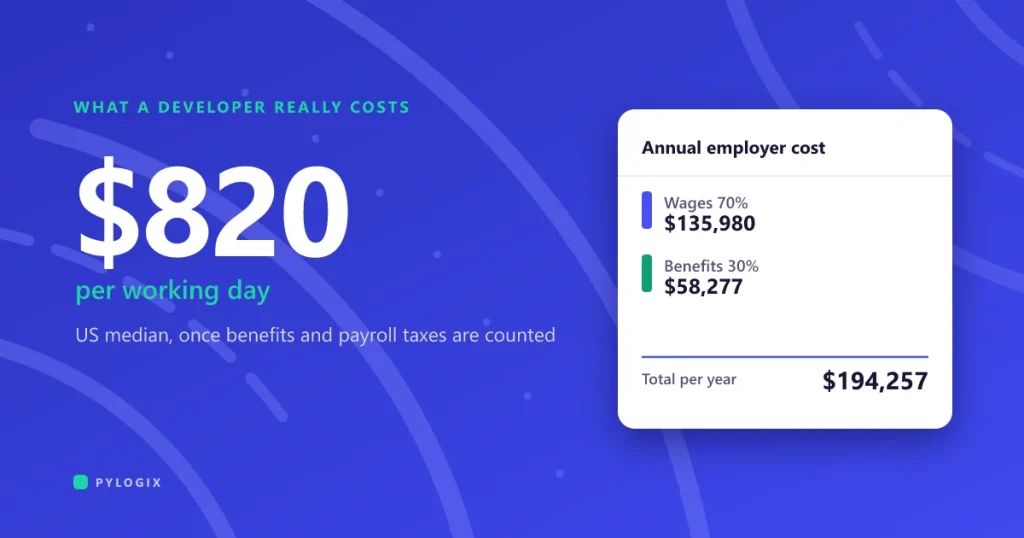
It depends on the scope, and a figure quoted before anyone understands the work is a guess. A focused internal tool can take a small team a couple of months. A customer-facing platform with several integrations usually takes three to six months to a first release. Discovery ends with a scoped estimate and a range, so you know the likely cost before you commit to the build. Our guide to custom software costs shows how to compare a quote with hiring.
How long does it take to build custom software?
Three to six months to a first release is typical for a mid-sized web application, followed by four to six weeks of stabilization after launch. Smaller tools can ship sooner. Discovery sets the real timeline for your project, and this breakdown shows where the time goes.
Do we own the code and the intellectual property?
Yes. The code lives in your repository from the first commit, the contract assigns all intellectual property to you, and the infrastructure runs in your own cloud account.
Can you work with our existing systems and developers?
Yes, and most projects need to. We integrate with ERPs, CRMs, payment providers and in-house databases, and our engineers can work inside your repositories and follow your process alongside your own team.
What happens after launch?
We stay on through a stabilization period to fix whatever real use uncovers. After that you can take the software in-house with full documentation, or keep us on a support plan for fixes, updates and new features.
Where is your team based?
We have offices in Houston, Texas and in London, and we work with clients across the United States and the United Kingdom.
Will you sign an NDA before we share details?
Yes. We are happy to sign your NDA before the first detailed conversation about your project.
Before you hire a development partner
 How much custom software development really costs
 How to choose a software development partner
 Build or buy: when custom software pays off
Tell us what you need to build
Send a rough outline. We will come back with questions, a suggested approach and what a discovery phase would cover. There is no obligation and no sales script.